Takeaway:
- Most surface scratches, scuffs, and small dents in luxury vinyl flooring can be fixed with cleaning, buffing, or a color-matched filler kit rather than full plank replacement.
- Deep gouges that expose the core layer, or planks damaged by trapped moisture, typically need a single-plank replacement instead of a patch.
- Humidity control matters in a climate like Helena, MT, where seasonal temperature swings can affect how vinyl planks expand, contract, and hold adhesive.
Light scratches, scuffs, and small dents are the most common complaints with resilient flooring, and the vast majority can be addressed at home without swapping out material. Deeper gouges or cracked planks are a different story and usually call for a more involved fix. Homeowners researching Luxury Vinyl Flooring repair options generally want to know which problems are DIY-fixable and which ones signal it is time to replace a section.
Understanding the layers of a vinyl plank helps explain why some damage is cosmetic and some is structural. Vinyl flooring is built with a printed design layer under a clear wear layer, and once that wear layer is breached, filler and sealant can only do so much. A gouge is a deep scratch where material has been removed, often exposing lower layers, while a dent is an indentation where the material has been compressed but not necessarily removed.
Fixing Surface Scratches and Scuffs
Minor marks from foot traffic, grit, or pet claws are usually confined to the top wear layer and respond well to simple techniques.
- Clean the area first. Sweep away debris and wipe the scratched area with a damp cloth.
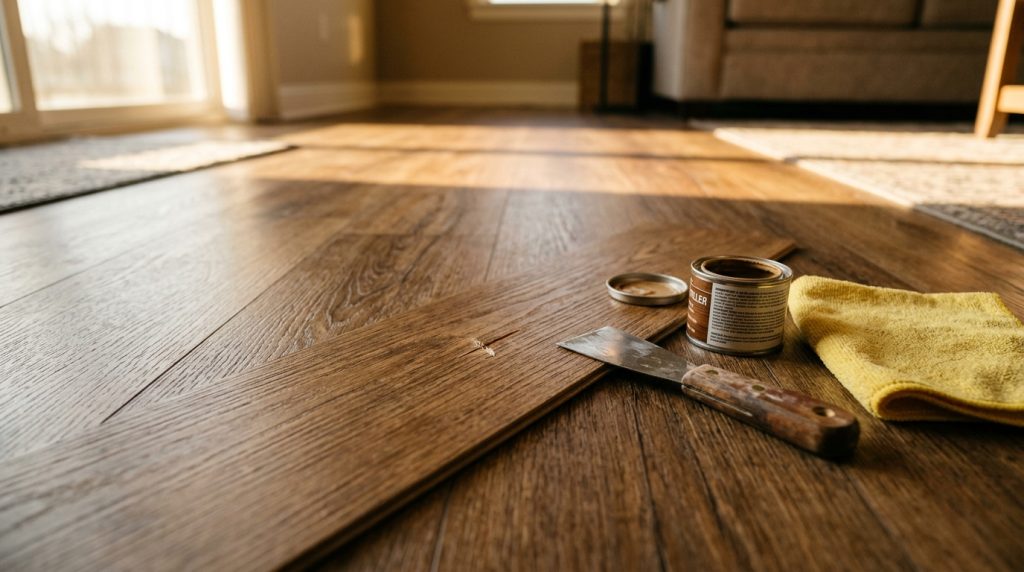
- For light marks, buff gently. Small scratches are usually the easiest to repair: clean the damaged area thoroughly, then use a reputable repair kit or vinyl floor scratch remover to fill surface marks and buff the area with a microfiber cloth to blend the finish with the surrounding planks.
- Avoid wax-based polish on a regular basis, since wax-based products can leave a residue that attracts dirt.
Repairing Deeper Gouges and Dents
Once a scratch is deep enough to feel with a fingertip, or a heavy object leaves a visible dent, a filler-based repair is usually the next step before considering plank replacement.
- Clean and dry the damaged spot completely before applying any product.
- Choose the right filler. For small chips, use a color-matching vinyl repair putty or epoxy designed for flooring, applying, smoothing, and slightly overfilling, then sanding flush and resealing.
- For dents specifically, gentle heat can help. A hair dryer or heat gun on low can make the vinyl more pliable, then light pressure using a clean cloth or the back of a spoon can press down and help the vinyl return to its original shape.
- Test any filler or color-match product on a hidden section first, since cutting a patch from matching scrap and securing it with vinyl adhesive while feathering the edges, and always testing color and bond strength in a hidden spot first, helps the repair blend properly.
| Damage Type | Typical Repair Method | Replacement Needed? |
| Light scuff or scratch | Buffing, cleaner, or floor finish pen | No |
| Shallow gouge | Color-matched filler or vinyl repair kit | Usually no |
| Deep gouge exposing core | Filler patch or plank swap | Often yes |
| Cracked or lifted plank | Full plank replacement | Yes |
When a Plank Replacement Is the Better Option
Some damage goes beyond what filler or buffing can fix, particularly when the design layer is exposed or a plank has cracked. Replacing the plank is recommended only if the damage extends through the wear layer, exposes the core, or causes structural damage. The replacement process itself is methodical:
- Identify the damaged plank and carefully disassemble planks from the nearest wall toward the affected section, remove the damaged piece and replace it with a matching plank, ensuring edges lock securely and remain level, then reinstall surrounding planks in reverse order to restore the floor’s appearance and stability.
Moisture-related damage deserves separate attention, since trapped water under flooring can cause loosening or microbial growth that a simple patch will not solve. According to EPA moisture control guidance, keeping indoor humidity low, ideally between 30 and 50 percent relative humidity, is central to preventing mold growth in a home. In Helena, MT, where dry winters and swings in indoor heating can stress flooring adhesives and seams, checking for curling edges or soft spots near exterior walls is a reasonable seasonal habit.
Business Info and Local Context
Flooring contractors working in Helena, MT, including Big Sky Installations LLC, generally handle installation, design, and material selection for luxury vinyl, hardwood, laminate, carpet, and garage floor coatings rather than acting as a stand-alone repair service. Homeowners weighing a filler repair against a full plank swap can benefit from a professional opinion when damage is widespread or when it is unclear whether the subfloor underneath has been compromised by moisture.
Frequently Asked Questions
Can a deep scratch in luxury vinyl plank flooring always be filled instead of replaced? Not always. Replacement is the better route once the damage extends through the wear layer, exposes the core, or causes structural damage, even if filler can temporarily mask the mark.
What is the difference between a gouge and a dent in vinyl flooring? A gouge is a deep scratch where material has been removed, often exposing lower layers, while a dent is an indentation where the material has been compressed but not necessarily removed. Dents often respond to gentle heat, while gouges usually need filler or a plank swap.
Does Helena’s climate affect how luxury vinyl flooring ages? Seasonal humidity and temperature shifts can influence how planks expand and contract and how well adhesive holds, which is why monitoring indoor humidity levels matters for flooring longevity in any home.
Is it worth calling a professional for a single damaged plank? For an isolated scratch or small dent, a DIY filler kit is often sufficient. For damage near seams, multiple affected planks, or signs of moisture underneath, a professional assessment helps confirm whether a patch or a full plank replacement is the right call.
Homeowners uncertain whether a specific area of damage calls for a patch, a plank swap, or a broader look at the subfloor can consult a local flooring professional for an in-person assessment before deciding on next steps.


