Short answer:
- Material, moisture resistance, and layout fit matter most when choosing bathroom cabinets for a humid, space-limited room.
- Hudson County, NJ homes often need cabinet solutions suited to older building stock and compact floor plans.
- Permits are generally not required for cabinet swaps alone, but related plumbing or electrical changes may trigger NJ construction code review.
Selecting new Bathroom Cabinets involves more than picking a finish that looks appealing in a showroom. Cabinets in a bathroom face daily exposure to humidity, temperature swings, and water splashes, which means durability and construction quality carry more weight than they would in a dry living space. For homeowners across Hudson County, NJ, where many residences include older plumbing and tighter bathroom footprints, matching cabinet dimensions and materials to the room’s actual conditions is a practical first step rather than an afterthought.
Material and Moisture Resistance
Standard particleboard cabinets tend to swell, warp, or delaminate when exposed to consistent moisture. Choosing materials built for wet environments reduces long-term maintenance and replacement costs.
- Solid wood with a sealed or moisture-resistant finish holds up better than untreated composite boards.
- Plywood boxes with water-resistant glue perform more consistently than particleboard in humid rooms.
- Cabinet hardware finishes such as brushed nickel or matte black resist corrosion better than unfinished metals in steady moisture.
Layout, Storage, and Daily Function
A cabinet upgrade should account for how the space gets used every day, not only how it looks when the project is finished. Bathrooms with limited square footage, common in many Hudson County, NJ homes built decades ago, often benefit from vertical storage or narrower cabinet depths that preserve floor clearance.
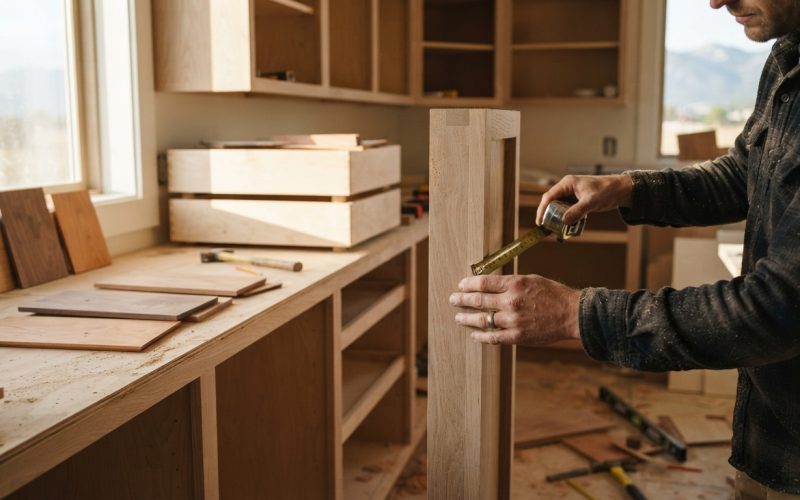
- Measure the full footprint, including door swing and drawer clearance, before selecting cabinet sizes.
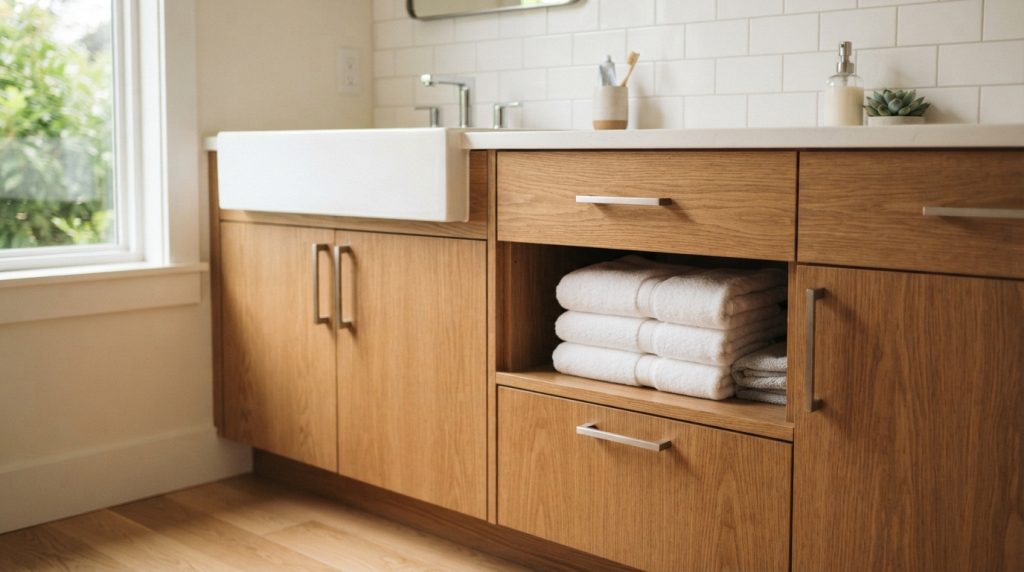
- Consider pull-out shelving or drawer organizers for towels, toiletries, and cleaning supplies.
- Account for plumbing access points so cabinet installation does not block shutoff valves or vent stacks.
Permits, Code Compliance, and Local Considerations
Cabinet replacement alone is typically treated as a cosmetic update under New Jersey’s construction code framework, meaning it usually does not require a separate permit. That changes once a project involves relocating plumbing lines, adding electrical circuits for under-cabinet lighting, or altering wall structure to fit a larger cabinet footprint. The New Jersey Division of Codes and Standards oversees the Uniform Construction Code statewide, and its subcodes govern when plumbing, electrical, or structural permits apply to renovation work, including bathroom projects.
- Like-for-like cabinet swaps in the same location generally fall outside permit requirements.
- Adding new electrical circuits or moving plumbing supply lines during a cabinet upgrade can require subcode permits.
- Checking with the local construction office before work begins helps confirm which rules apply to a specific Hudson County, NJ property.
Comparing Common Cabinet Material Options
| Material | Moisture Resistance | Typical Lifespan | Maintenance Needs |
| Solid wood (sealed) | Good with proper finish | Long | Periodic resealing |
| Plywood with moisture-resistant glue | Good | Long | Low |
| Particleboard (untreated) | Poor | Short in humid rooms | High, prone to swelling |
| Thermofoil-wrapped MDF | Moderate | Moderate | Low, avoid excess heat/steam |
Based in Jersey City, New Jersey, Elegant Kitchen & Bath works with homeowners across Hudson County, NJ on cabinetry and related design projects, with published details available through its Elegant Kitchen & Bath profile. The company’s cabinetry and design offerings, as listed on its website, center on custom cabinet selection, measurement, and installation guidance for kitchens and bathrooms.
Frequently Asked Questions
Do bathroom cabinets need to be water-resistant everywhere in the room? Cabinets positioned near sinks, tubs, or showers benefit most from moisture-resistant materials, while cabinets farther from direct water exposure have more flexibility in material choice.
How long do quality bathroom cabinets typically last? Lifespan depends heavily on material and humidity control; solid wood and moisture-resistant plywood generally outlast untreated particleboard in consistently humid bathrooms.
Is a permit needed just to replace bathroom cabinets? Replacing cabinets in the same footprint without altering plumbing or electrical lines is typically considered cosmetic work under New Jersey’s construction code and does not usually require a permit on its own.
What should be measured before ordering new cabinets? Door swing clearance, drawer depth, plumbing access points, and overall footprint should be measured and confirmed before finalizing cabinet dimensions.
Final Considerations
Cabinet upgrades affect both the daily function and long-term durability of a bathroom, making material choice and layout planning the two factors most worth careful attention. Reviewing local permit rules before starting any project that touches plumbing or electrical work helps avoid delays once installation begins.
Additional published information for Elegant Kitchen & Bath outlines current cabinetry options available to homeowners in the area.