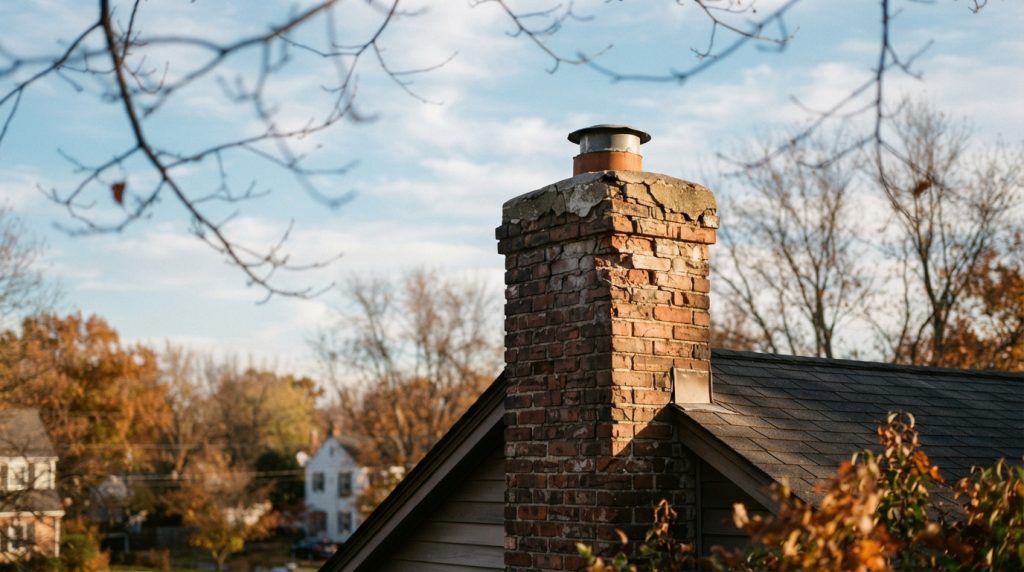
Essentially:
- Chimney repair addresses cracked mortar, damaged crowns, and flue liner issues before they cause water intrusion or structural failure.
- Delaying repairs in older masonry allows freeze-thaw cycles and moisture to accelerate brick and mortar breakdown.
- Routine inspection and prompt repair protect indoor air safety and reduce the scope of future restoration work.
Chimney repair refers to the inspection, patching, or rebuilding of masonry and flue components to correct deterioration before it compromises a home’s structure or venting safety. Homeowners searching for this service typically notice cracked mortar joints, a damaged crown, or water stains near the fireplace and want to know whether the issue requires immediate attention.
Addressing these signs early is central to protecting a chimney’s long-term function. Chimney Repair often becomes necessary when thermal expansion, corrosive flue gases, or shifting soil weaken the structure over time, conditions that are common in older brick homes throughout the Chicago area. Heritage Masonry, a masonry restoration contractor based in USA, serves customers across Lakeview, IL, where many homes feature the brick and masonry chimneys typical of the region’s older housing stock.
Why Chimney Damage Spreads Quickly
Masonry chimneys are exposed to more weather stress than almost any other part of a house. Left unaddressed, small cracks or gaps widen with each seasonal temperature swing.
- Freeze-thaw cycles force moisture into mortar joints, expanding cracks each winter.
- Deteriorated crowns allow water to seep behind the chimney face, loosening brick.
- Damaged flue liners can let heat and gases reach combustible material inside walls.
A Level 1 inspection, the industry’s standard annual check defined under NFPA 211, is the recommended level of inspection to use during routine chimney cleanings and annual inspections. For chimneys with visible damage, a water event, or a change in how the fireplace is used, a more detailed Level 2 inspection is typically warranted, since it uses video equipment to examine down inside the flue, and physically accesses the roof, attic, crawl space, and any other area that reveals the chimney’s condition. Homeowners can review the CSIA inspection standards for a full breakdown of what each level covers.
Common Chimney Repair Needs in Older Homes
Lakeview, IL’s older brick housing stock is especially prone to specific masonry issues tied to age and climate exposure. Recognizing these patterns helps homeowners decide when professional evaluation is warranted.
| Issue | Typical Cause | Repair Approach |
| Cracked or spalling brick | Freeze-thaw cycles, moisture absorption | Brick replacement, repointing |
| Damaged chimney crown | Age, poor original construction, water pooling | Crown rebuild with water-shedding slope |
| Deteriorated flue liner | Heat exposure, corrosive flue gases, age | Liner inspection and relining |
| Mortar joint erosion | Weathering, improper mortar mix | Tuckpointing with compatible mortar |
Flue liner and smoke chamber inspection matters beyond cosmetic concerns, since these components are responsible for safely venting combustion byproducts. Full or partial chimney rebuilds, which reconstruct the structure from the roofline up and often include a reinforced crown, address more advanced deterioration that patch repairs cannot resolve.
When to Schedule an Inspection or Repair
Certain conditions signal that a chimney should be evaluated sooner rather than later. Waiting often increases both the cost and complexity of eventual repairs.
- Visible cracks in the crown or brick face, especially after winter.
- Water stains on ceilings or walls near the chimney chase.
- Rust, gaps, or missing sections in the flashing where the chimney meets the roof.
- A chimney fire, severe storm, or change in fuel type, which calls for a more thorough inspection.
A mortar analysis is sometimes used to confirm the correct repair materials, since mismatched mortar can accelerate deterioration rather than resolve it.
Frequently Asked Questions
How often should a chimney be inspected? Annual inspection is standard practice for chimneys in regular use, with more detailed evaluation recommended after storms, fires, or before a home sale.
Can minor mortar cracks wait until spring? Delaying repair through another freeze-thaw season typically allows cracks to widen, so addressing visible damage promptly tends to limit the extent of repair needed.
Is chimney repair different from chimney sweeping? Yes. Sweeping removes creosote and debris from the flue, while repair addresses structural issues such as cracked brick, damaged crowns, or deteriorated liners.
Does homeowners insurance cover chimney repair? Coverage varies by policy and cause of damage, so reviewing individual policy terms or consulting an insurance provider is advisable before assuming coverage applies.
Final Thoughts and Next Steps
Chimney condition affects both structural safety and indoor air quality, making routine inspection and prompt repair a practical priority for homeowners rather than an optional task. Addressing minor masonry issues before another freeze-thaw cycle or storm season typically limits both the scope and cost of future work.
Published details for Heritage Masonry outline the service area covered by its masonry restoration work.
