Quick take:
- A professional cleaning removes creosote and debris from the flue, smoke chamber, and firebox, then checks for structural issues.
- Most visits combine a Level 1 inspection with mechanical sweeping, following national fire-safety standards.
- Homeowners in Butler, NJ typically schedule this service annually before heating season begins.
A professional chimney cleaning combines mechanical brushing of the flue with a visual inspection of the firebox, smoke chamber, and connected venting. The goal is to remove creosote buildup and confirm the system is structurally sound before the next heating season.
Homeowners searching for Chimney Cleaning Butler NJ are usually looking for a straightforward answer: what the technician actually does, how long it takes, and what counts as a complete job versus a partial one. The process generally follows a sequence that starts with an inspection and ends with a cleanup of the work area.
The Inspection Comes First
Technicians typically begin with a Level 1 inspection before any brushing starts. According to the Chimney Safety Institute of America, a Level 1 inspection is detailed in the National Fire Protection Association (NFPA) 211: Standard on Chimneys, Fireplaces, Vents, and Solid Fuel-Burning Appliances. This step checks accessible parts of the chimney and connected appliance for obvious damage or blockages before sweeping begins.
A few things the inspection typically covers:
- Verifying the flue is free of obstructions, nests, or heavy soot
- Checking visible masonry, the damper, and smoke chamber for cracks or wear
- Looking for signs of water intrusion or flashing problems near the chimney crown
A Level One inspection is the recommended level of inspection to use during routine chimney cleanings and annual inspections, and is the appropriate inspection when nothing is changing. If the sweep finds signs of prior fire damage or structural movement, a more detailed Level 2 inspection is usually recommended instead.
Mechanical Sweeping and Debris Removal
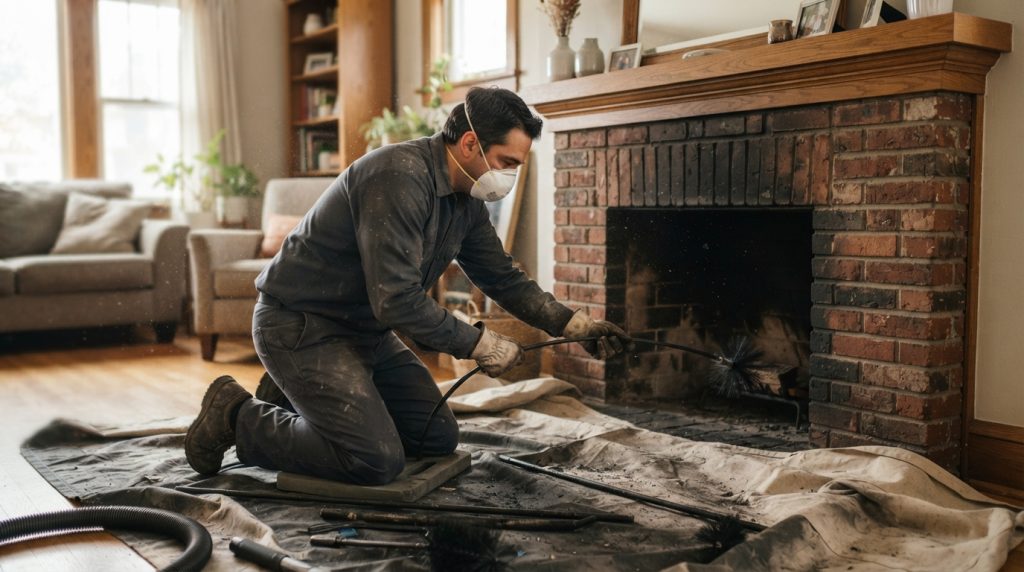
Once the inspection is complete, the actual cleaning begins. A complete chimney sweeping includes the chimney flue and smoke chamber, not just the visible firebox. Brushes sized to the flue are worked from the top or bottom of the chimney to loosen creosote and soot, which then fall into a containment area for removal.
The optimal method for cleaning a chimney is by a mechanical brushing of the chimney in conjunction with a complete evaluation of the system, done by a qualified chimney professional, and annual chimney inspections are recommended for good reason since they often reveal hidden problems with a chimney structure that could be potentially hazardous. Technicians typically use tarps and a shop vacuum with a HEPA filter to keep soot from spreading into the living space during the process.
Why Creosote Removal Matters
Creosote is a byproduct of burning wood that coats the interior of the flue over time. Left unaddressed, it narrows the airway and becomes a fuel source for chimney fires.
| Creosote Stage | Appearance | Risk Level |
|---|---|---|
| Stage 1 | Flaky, soot-like | Low |
| Stage 2 | Hardened, glazed patches | Moderate |
| Stage 3 | Thick, tar-like glaze | High |
Sweeps document which stage is present and note it on the service summary so homeowners understand the condition of the system before the next burning season.
After the Sweep: Final Checks
Before leaving, a technician typically reviews findings with the homeowner and notes any repairs that fall outside routine cleaning. This can include:
- Cracked crown or deteriorated mortar joints
- Damaged or missing chimney caps
- Damper issues affecting proper draft
Homeowners in Butler, NJ often schedule this service in early fall, before regular fireplace or wood-stove use begins for the season.
Frequently Asked Questions
How often should a chimney be cleaned? Frequency depends on usage, but annual inspection is a widely recommended baseline for active wood-burning systems, with cleaning performed whenever creosote buildup or blockages are found.
Does cleaning cover gas fireplaces too? Gas appliances produce less creosote but still benefit from inspection of the venting system and connections, since blockages and corrosion can occur independent of fuel type.
How long does a typical cleaning take? A routine Level 1 inspection and sweep generally takes about an hour for a single-flue system, though homes with multiple fireplaces or stoves may take longer.
What signals that a chimney needs cleaning sooner than usual? Visible soot buildup, a strong smoky odor when the fireplace is not in use, or difficulty getting a fire to draft properly are common signs worth checking sooner.
Business Information and Next Steps
Eagle & Eagle is a home improvement contractor based in Butler, NJ, serving the surrounding area.
Published details about scheduling and service availability are accessible through Click Here, which covers the local area context for homeowners planning seasonal maintenance.