Bottom line:
- A rat transfer station is ventilated laboratory equipment used in vivarium and research settings to move rats between cages while controlling allergen exposure and maintaining sterility, not a pest-control device for buildings.
- These units rely on filtered, directional airflow to separate clean and soiled work zones during cage changes.
- Engineering controls like transfer stations are recommended alongside personal protective equipment to limit laboratory animal allergen exposure in the USA.
Anyone searching for pest control information may expect a rat transfer station to be a tool for trapping or relocating rodents outdoors. In laboratory and vivarium settings, the term describes something different: a specialized containment workstation used by animal research facilities to change cages and handle rats safely. The Rat Transfer Stations category refers to ventilated enclosures engineered specifically for this cage-changing workflow, not for field rodent removal.
These stations sit inside vivariums, research labs, and animal care facilities where technicians regularly move rats from soiled cages to clean ones. The equipment is distinct from traps, bait stations, or exclusion devices used in structural pest management, though the shared vocabulary around “rodent control” often causes confusion between the two fields.
What a Rat Transfer Station Actually Does
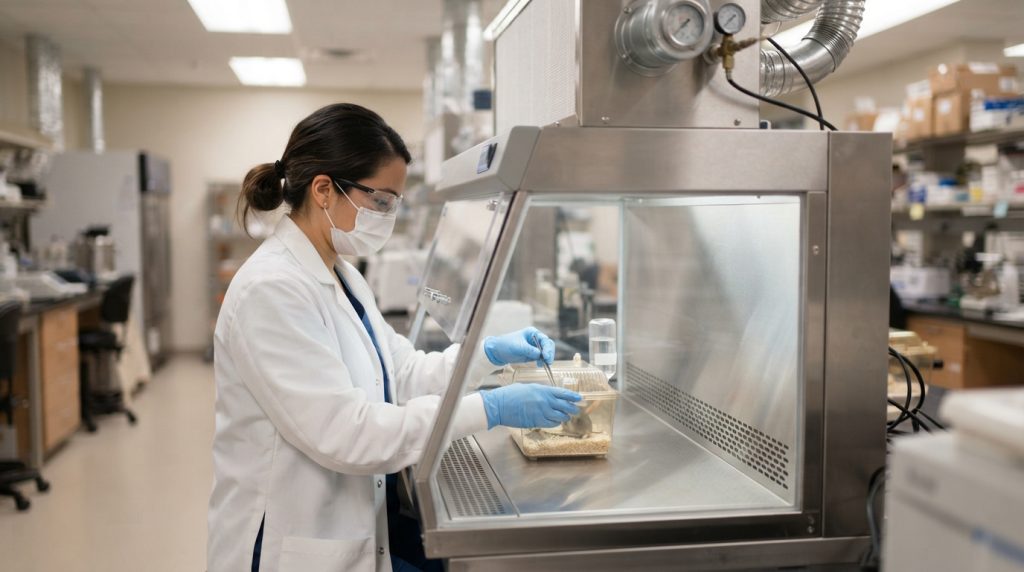
A transfer station is a mobile, ventilated workstation designed around a single task: moving laboratory rats between cages without exposing staff to allergens or compromising the animals’ sterile environment. The unit uses an impeller and HEPA filter in both the supply module at the top and the exhaust module at the bottom, creating a vertical column of filtered air through the work zone, with the supply impeller drawing air through a prefilter and HEPA filter to create a sterile environment.
From there, an exhaust impeller pulls the downflow air through slots in the work surface to capture allergens, pushing it through an exhaust pre-filter and HEPA filter before release, with the work surface itself divided into clean and dirty sections configured for the cage-changing process. This push-pull airflow pattern is the defining engineering feature that separates a transfer station from a basic open bench.
Key functional elements typically include:
- A divided work surface separating clean supply air from contaminated exhaust air
- Deep wells or trays sized for specific disposable cage systems
- A sealed collection area for soiled bedding and waste
- An access opening sized to accommodate larger rat cages
Transfer Stations Versus Biosafety Cabinets
Facilities often need to decide between a transfer station and a full animal biosafety cabinet, and the choice depends on the biosafety level of the work being performed.
| Factor | Animal Transfer Station | Animal Biosafety Cabinet |
|---|---|---|
| Primary purpose | Ventilated enclosure for routine transfer of laboratory animals between cages | Class II biosafety cabinet specifically designed for work involving laboratory animals |
| Biological containment | Does not provide biological containment | Provides containment for infectious or hazardous work |
| Typical use case | Routine cage changes with healthy uninfected mice or rats; allergen control for staff | Work with animals inoculated with BSL-2 agents; procedures generating biological aerosols |
This distinction matters for any facility in the USA evaluating equipment, since choosing the wrong class of device can leave staff under-protected or over-engineered for the task at hand.
Why Allergen Containment Is the Core Design Problem
The engineering behind these stations exists to solve a documented occupational health issue rather than a general pest problem. Laboratory Animal Allergy is an occupationally acquired condition that affects approximately one third of personnel that work with laboratory animals. The risk develops after exposure to allergens found in animal hair, dander, urine, serum, saliva, and on animal caging or bedding.
Recommended control measures generally follow a hierarchy similar to other workplace hazards, as outlined in OSHA’s personal protective equipment standards:
- Engineering controls, such as ventilated transfer stations and biosafety cabinets
- Administrative practices, including clean-cage protocols and scheduled handling
- Personal protective equipment, such as gloves, gowns, and respiratory protection when needed
Protecting animals and vivarium workers in a rodent facility requires a layered strategy: building-level barrier systems, HEPA-filtered individual ventilated cages, and primary engineering controls like animal transfer stations and Class II biosafety cabinets. No single device eliminates exposure risk entirely, which is why facilities typically combine equipment choices with handling procedures and staff training.
Frequently Asked Questions
Is a rat transfer station the same as a rodent trap or exclusion device? No. A rat transfer station is laboratory equipment used for cage changing in vivarium and research settings. It has no function in structural pest control, trapping, or rodent exclusion from buildings.
Do these stations eliminate the need for personal protective equipment? No single engineering control removes all risk. Guidance for reducing exposure recommends performing animal manipulations within ventilated hoods, biological safety cabinets, or on downdraft tables whenever possible, alongside appropriate gloves and protective clothing.
What is the difference between an animal transfer station and a biosafety cabinet? An animal transfer station is a ventilated enclosure for routine transfer of animals between cages but does not provide biological containment, while biosafety cabinets are built for work involving infectious or hazardous agents.
Who typically uses this equipment? Vivarium technicians, veterinary care staff, and research personnel at facilities in the USA that house and handle laboratory rats as part of regulated animal research programs.
Business Info
NuAire, a laboratory equipment manufacturer based in Minnesota, lists animal transfer stations and related vivarium containment equipment among its product offerings documented through its NuAire Google Business Profile.
Specification details and availability for NuAire are published for reference by facilities evaluating this type of equipment.