Short answer:
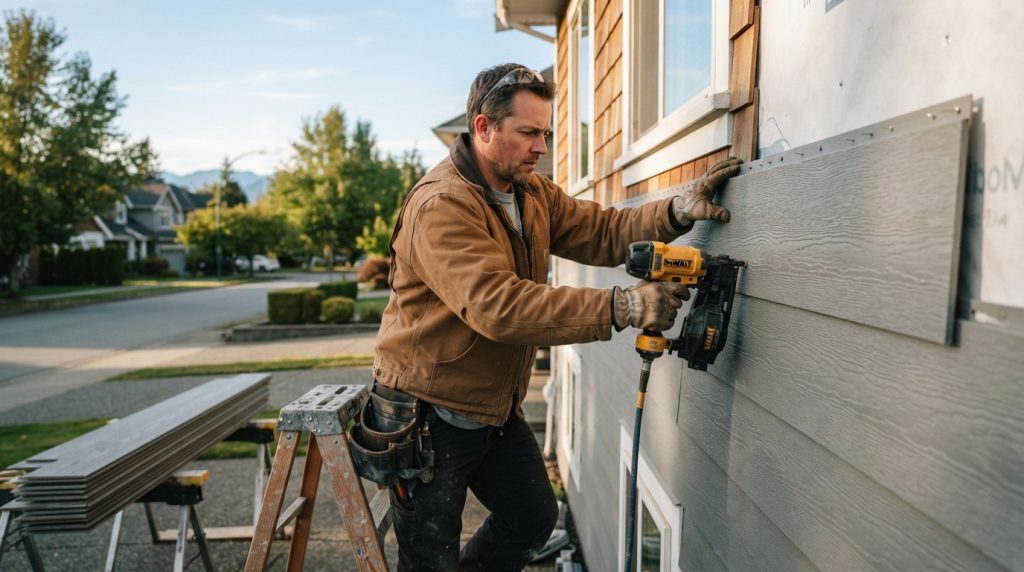
- Residential siding replacement involves removing worn or damaged exterior cladding and installing new material, such as fiber cement, to restore protection, appearance, and in some cases wall insulation.
- Material choice, moisture barriers, and whether exterior insulation is added during the project all affect long-term performance more than the siding product alone.
- In Denver, CO, homeowners typically evaluate replacement based on hail and freeze-thaw exposure, existing wall condition, and energy goals.
Siding wears down from sun exposure, moisture, hail, and temperature swings long before most homeowners notice structural problems underneath. Residential siding replacement addresses these issues by removing compromised cladding and replacing it with new material matched to the home’s construction and climate exposure. The scope of a project can range from a single damaged section to a full exterior replacement, depending on the extent of moisture intrusion, pest damage, or material failure found once the old siding comes off.
Understanding what happens during a typical project, and what factors influence material selection, helps homeowners set realistic expectations before committing to a contractor or a product.
Why Siding Fails and When Replacement Makes Sense
Siding does not fail uniformly. Some sections deteriorate faster than others depending on sun exposure, drainage, and original installation quality.
Common signs that replacement is warranted include:
- Warping, cracking, or bubbling panels that no longer lie flat against the wall
- Persistent moisture stains or soft spots on interior walls near exterior corners
- Visible gaps at seams, trim, or window transitions that let water behind the cladding
- Repeated repairs to the same sections within a short span of years
A professional inspection during tear-off often reveals the condition of the sheathing and any existing moisture barrier, which matters more to long-term performance than the siding product chosen.
Material Options and Insulation Considerations
Fiber cement is a common replacement material because of its durability and resistance to fire, pests, and moisture compared to older wood products. Homeowners weighing materials should understand that siding alone contributes relatively little to a wall’s total insulation value compared to insulation installed in the wall cavity or added as a continuous layer.
| Siding Material | Typical R-Value (Material Only) | Primary Strength |
|---|---|---|
| Fiber cement (uninsulated) | Under 1 | Durability, fire resistance |
| Standard vinyl | Around 0.61 | Low cost, low maintenance |
| Insulated vinyl | 2.0 to 5.0 | Added thermal resistance |
According to a Department of Energy guide on home insulation upgrades, if you replace the exterior siding on your home, consider adding insulation at the same time. The same guidance notes that whenever exterior siding is removed on an uninsulated wood-frame wall, contractors can drill holes in the sheathing and blow insulation into the empty wall cavity before installing the new siding. This makes tear-off the most practical window for upgrading a wall’s thermal performance, since the sheathing is already exposed.
Homeowners in Denver, CO evaluating a siding project often weigh this insulation opportunity against budget, since adding exterior rigid foam or cavity insulation during a re-side increases upfront cost but can address drafts that siding replacement alone will not fix.
What the Replacement Process Typically Involves
A siding replacement project generally follows a sequence rather than a single swap of old panels for new ones.
- Removal of existing siding and trim to expose the wall sheathing
- Inspection of sheathing, framing, and any existing moisture barrier for rot or damage
- Repair of damaged sheathing and installation or replacement of a water-resistive barrier
- Optional addition of insulation, either in the wall cavity or as continuous exterior foam
- Installation of new siding material, trim, and flashing details around windows and doors
Skipping the inspection step is one of the more common mistakes in re-siding projects, since hidden moisture damage left unaddressed can undermine even high-quality new material within a few years.
Choosing a Qualified Installer
Fiber cement and other modern siding products require specific fastening patterns, clearances, and flashing details to perform as intended. A company describes its work as premium replacement windows, doors, and siding services, with Five Seasons Windows & Doors operating from Englewood, CO and serving the Denver metro area. Verifying manufacturer certification, asking about moisture barrier practices, and requesting detail on how trim and flashing will be handled around penetrations are reasonable steps before signing a contract for any sizable siding project.
Frequently Asked Questions
Does new siding automatically lower energy bills? Not on its own. Siding material typically contributes a small share of a wall’s total insulation value, so savings depend more on whether insulation is added during the project and how well air leaks are sealed.
How long does a typical residential siding replacement take? Timelines vary with home size, material, and weather, and are best confirmed with a contractor after an in-person assessment of the specific property.
Can siding be replaced on just one side of a house? Partial replacement is possible when damage is localized, though matching new material and color to existing sections can be a visible challenge over time.
What should be inspected before approving a siding estimate? Homeowners should ask whether the sheathing and water-resistive barrier will be inspected during tear-off, since hidden damage affects both cost and the long-term performance of the new siding.
Replacing siding touches both the appearance and the underlying protection of a home, so decisions about material and insulation are worth weighing carefully rather than rushing into the first available quote.
Current listing information for Five Seasons Windows & Doors is maintained for homeowners researching exterior replacement options in the area.