Short answer:
- A hearing test is a painless, non-invasive assessment that measures how well a person detects different sounds and speech frequencies.
- Early detection through regular screening can help reduce delays in diagnosis and support better communication, work performance, and quality of life.
- Adults aged 50 and older are advised to be screened at routine health care visits, with follow-up testing based on results.
Hearing changes often develop so gradually that many people do not notice them until family members or coworkers point out missed words in conversation. A professional evaluation remains the most reliable way to measure hearing accuracy and catch early changes before they interfere with daily communication.
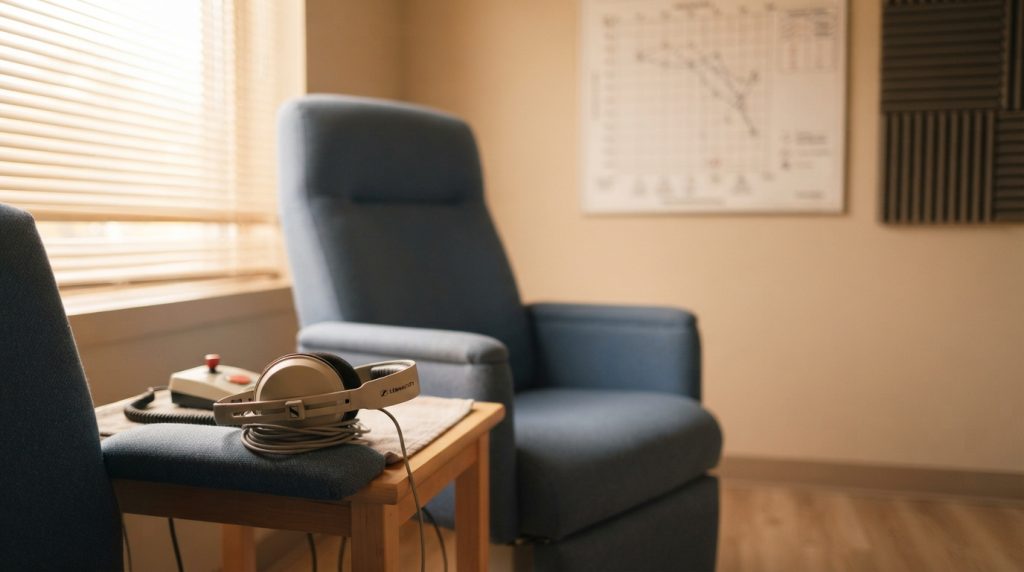
Hearing Tests in Webster, TX, typically involve a series of tones and speech sounds presented at different pitches and volumes to map out which frequencies a person can and cannot hear clearly. Audiologists plot results on an audiogram, a chart they use to classify the degree and pattern of hearing loss, if any. This information guides decisions about whether further monitoring, medical referral, or amplification devices may be appropriate.
Why Screening Matters at Different Life Stages
Hearing loss does not only affect older adults, though age remains a major risk factor. A clinical practice guideline published by the American Academy of Otolaryngology-Head and Neck Surgery Foundation recommends that clinicians screen patients aged 50 years and older for hearing loss at the time of a health care encounter. The guideline notes that if screening suggests a problem, clinicians should examine the ear canal and tympanic membrane with otoscopy or refer to a clinician who can examine the ears.
Workplace noise is another common factor. According to the CDC NIOSH noise surveillance program, occupational hearing loss is tracked as a measurable public health concern among exposed workers. Common indications for testing include:
- Difficulty following conversation in noisy settings such as restaurants
- Frequent requests for others to repeat themselves
- Ringing or buzzing sounds in one or both ears
- Regular exposure to loud workplaces, machinery, or recreational noise
What Happens During a Typical Evaluation
Most evaluations follow a predictable sequence designed to isolate different aspects of hearing function.
- A review of medical history and any reported symptoms, such as tinnitus or balance issues
- A visual exam of the ear canal to check for wax buildup, infection, or structural issues
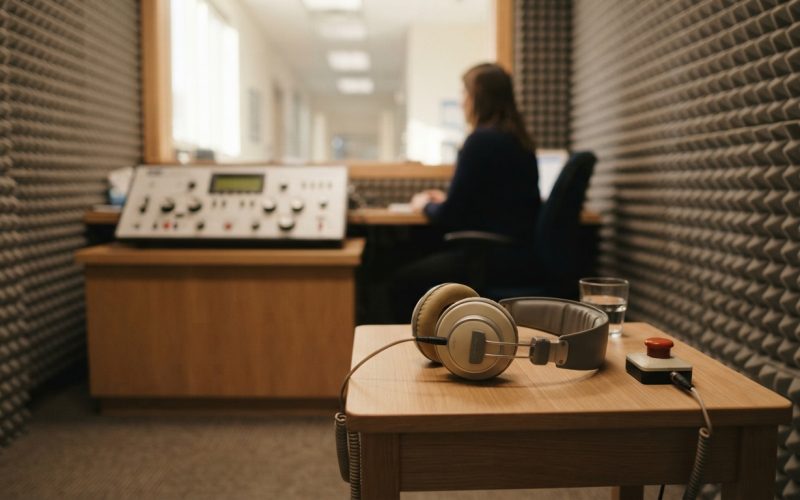
- Pure-tone testing through headphones to measure the quietest sounds detectable at various pitches
- Speech recognition testing to assess how clearly words are understood, not just heard
- A review of results compared against standard hearing thresholds
Clinical guidance supports behavioral audiometry as the standard approach for older children and adults, while infants are typically screened using otoacoustic emissions or auditory brainstem response methods, reflecting the fact that screening tools differ by age group rather than a single universal test.
Comparing Common Hearing Test Methods
| Method | Typical Use | What It Measures |
| Pure-tone audiometry | Adults and older children | Softest audible tone at each frequency |
| Speech audiometry | Adults and older children | Clarity of word recognition at set volumes |
| Otoacoustic emissions (OAE) | Infants and newborns | Inner ear response to sound stimulation |
| Tympanometry | All ages | Eardrum movement and middle ear function |
Bay Area Audiology & Hearing Aids serves customers across Webster, TX, offering access to diagnostic evaluations without requiring travel outside the local service area.
The practice is affiliated with Clear Lake Medical Ear, Nose & Throat and has operated in the Webster, TX area for decades. According to its Google Business Profile, services include comprehensive hearing evaluations for adults and children, hearing aid fitting and dispensing, repairs, hearing protection, and assistive listening devices.
Frequently Asked Questions
How often should adults be screened for hearing loss? Guidance recommends screening at a health care encounter starting at age 50, with reassessment at least every three years if hearing loss is reported or suspected.
Is a hearing evaluation uncomfortable or invasive? No. The process relies on headphones, soft tones, and spoken words, with no needles, dyes, or physical discomfort involved.
Can untreated hearing loss affect more than communication? Research cited in clinical guidelines links untreated hearing loss with increased risks of social isolation and reduced quality of life, which is part of the rationale for earlier screening in adults 50 and older.
Do children need different testing than adults? Yes. Infants and young children are typically screened using otoacoustic emissions or auditory brainstem response testing, while older children and adults are evaluated using behavioral audiometry.
Scheduling and Next Steps
Published appointment and service details for Bay Area Audiology & Hearing Aids are available for reference regarding hours and location in the Webster, TX area. Readers experiencing changes in hearing clarity, ringing in the ears, or difficulty following conversation may find it useful to discuss these symptoms with a primary care provider or an audiology specialist as a first step toward a formal evaluation.