In Short
- Brick damage falls into several categories, including cracking, spalling, mortar loss, and structural movement, and each requires a different repair method.
- Surface patching works for minor cosmetic issues, while repointing and rebuilding are necessary for deeper mortar deterioration or structural problems.
- Matching mortar strength and composition to the original brick is critical to preventing future damage, according to federal preservation guidance.
Choosing the right repair method starts with correctly diagnosing what is wrong with the brickwork. Cosmetic cracks, crumbling mortar, and spalling brick faces each require a distinct approach. An incorrect diagnosis is one of the most common reasons masonry repairs fail within a few years.
Homeowners searching for brick repair are often dealing with one of three problems: cracked or missing mortar joints, spalling or flaking brick faces, or visible structural movement, such as bowing walls or stair-step cracks. Each issue requires a different solution, and applying the wrong treatment can trap moisture inside the wall and accelerate deterioration instead of preventing it.
Identifying the Type of Brick Damage
Before repairs begin, the damage must be classified correctly.
- Mortar joint erosion: Crumbling or missing mortar between bricks, often caused by age, water exposure, or freeze-thaw cycles.
- Spalling: Brick faces flaking, popping, or breaking off, frequently associated with moisture penetration and freezing conditions.
- Cracking: Diagonal or stair-step cracks that may indicate foundation settlement or structural movement.
- Efflorescence and staining: White mineral deposits or discoloration that can indicate moisture migration, although these signs do not necessarily mean a structural problem exists.
Each category points toward a different scope of work, ranging from a simple mortar repair to rebuilding an entire section of masonry.
Matching the Repair Method to the Problem
Not every brick issue requires the same level of intervention. Understanding the available repair methods helps homeowners discuss appropriate solutions with a qualified masonry contractor.
| Repair Method | Best For | Typical Scope |
|---|---|---|
| Tuckpointing or repointing | Deteriorated mortar joints | Removing damaged mortar to an appropriate depth and replacing it with a compatible mix |
| Brick replacement | Spalled, cracked, or broken individual bricks | Removing damaged units and installing matching replacement bricks |
| Partial rebuild | Localized structural movement or multiple failed bricks | Dismantling and rebuilding a section, potentially including new coping or flashing |
| Surface sealing | Appropriate cosmetic protection after repairs | Applying a suitable treatment only after underlying moisture problems have been addressed |
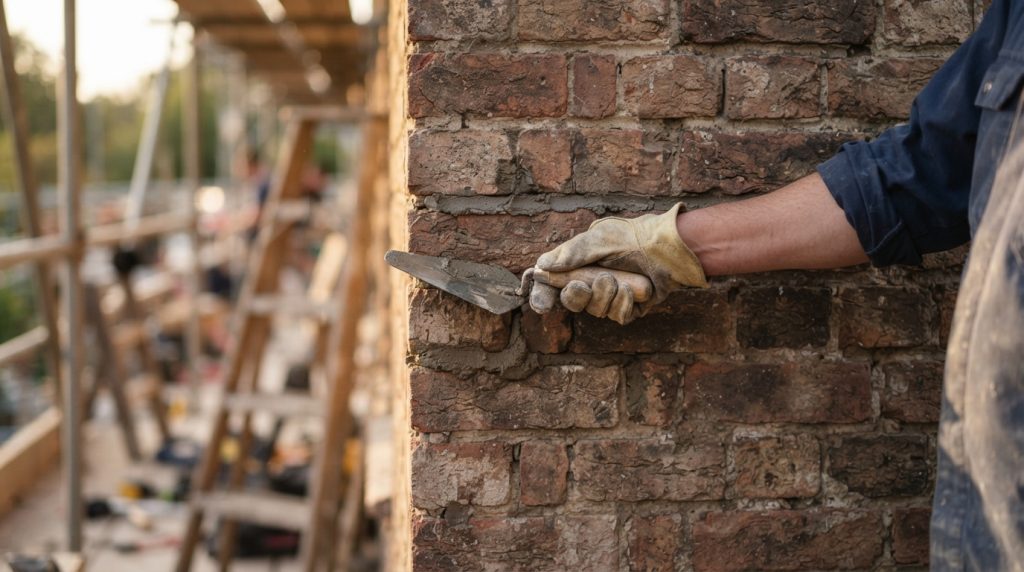
Repointing is one of the most frequently needed repairs on older brick homes, but it is also a task that can be performed incorrectly by inexperienced crews. According to the National Park Service’s Preservation Brief on repointing mortar joints, replacement mortar should be compatible with the physical properties of the historic mortar. A mix that is too hard or insufficiently permeable can trap moisture or transfer stress to the surrounding bricks, accelerating deterioration.
Why Mortar Compatibility Matters
Mortar is intended to serve as the more replaceable component of a masonry wall, generally weathering before the brick itself. When a contractor uses modern, high-strength mortar on an older wall made from softer bricks, the mismatch can contribute to brick-edge spalling as the masonry expands and contracts with temperature changes.
Three factors help determine whether a mortar mix is appropriate for a repair:
1. Compressive strength: The new mortar should be compatible with the strength of the existing mortar and brick.
2. Permeability: The mortar should allow moisture to escape rather than encourage water to accumulate inside the wall.
3. Color and texture: Matching the original appearance helps the repaired area blend with the surrounding masonry as it ages.
A qualified mason typically assesses the existing brick and mortar before selecting a replacement mix instead of applying one standard formula to every project.
When Brick Repair Becomes a Bigger Project
Some damage looks minor on the surface but signals a larger structural concern. Stair-step cracking near windows or wall corners, for example, can indicate foundation settlement rather than ordinary mortar deterioration. Bulging or leaning wall sections may suggest that wall ties or structural connections have failed and require more than surface-level patching.
In the Chicagoland area, Hynek Construction has worked on brick and masonry projects ranging from isolated mortar repointing to chimney and wall rebuilding. For homeowners considering brick repair in Skokie, IL, the distinction between a small patch and a more extensive rebuild depends on how far the deterioration has spread and whether the underlying structure remains sound.
A professional assessment can help establish whether the work requires localized repairs, replacement bricks, improved moisture management, or structural intervention. Addressing the root cause early can reduce the likelihood of recurring damage and additional repair costs.
Frequently Asked Questions
How do I know if my brick needs repointing or full replacement?
If the mortar is crumbling but the bricks remain intact, repointing may be sufficient. If individual bricks are cracked, spalling, or missing substantial pieces, those units may need replacement along with any necessary mortar repairs.
Can brick repair be done in any season?
Mortar curing is sensitive to temperature, and extreme cold or heat can affect bonding and strength development. Many masonry contractors schedule exterior repairs during moderate weather conditions or use appropriate protection when work must proceed in less favorable temperatures.
Is painting over damaged brick a valid repair option?
Paint or sealant does not correct deteriorated mortar or structural problems. Some coatings can also restrict moisture movement and contribute to further damage. The underlying issue should be assessed and repaired first, and any sealing treatment should be selected for compatibility with the masonry.
How long does a typical brick repair project take?
Timelines vary according to the scope of work. Minor mortar touch-ups may take part of a day, while chimney rebuilding or repointing multiple walls can take several days or longer. Weather, replacement brick availability, and hidden damage can all affect the schedule.
Brick repair is rarely a one-size-fits-all task. A method that protects one wall can damage another if the original problem is misdiagnosed. Homeowners dealing with cracked mortar, spalling bricks, or visible wall movement should seek an assessment that identifies the underlying cause before patching begins. Choosing compatible materials and the appropriate repair method helps preserve the masonry’s appearance, durability, and structural performance over time.