Short version:
- Commercial heating systems range from rooftop units to geothermal heat pumps, each suited to different building types and sizes.
- Federal efficiency standards for commercial heating and cooling equipment tightened as of January 1, 2025, affecting new equipment purchases.
- Matching system type, building layout, and maintenance plans helps control energy costs and reduce downtime risk in North Haven, CT.
Choosing a heating system for a commercial building comes down to matching the equipment type to the building size, usage patterns, and local climate demands. A commercial heating system in North Haven, CT, that fits an office may not suit a restaurant kitchen or a warehouse with high ceilings and variable occupancy.
Business owners in North Haven, CT typically weigh three factors before selecting equipment: upfront installation cost, long-term energy use, and how quickly a system can be serviced if it fails during peak winter demand. Each of these factors points toward a different mix of system types, which is why a one-size-fits-all recommendation rarely works for commercial properties.
Common Commercial Heating System Types
Commercial buildings generally rely on a handful of proven heating configurations, each with distinct advantages depending on square footage and building use.
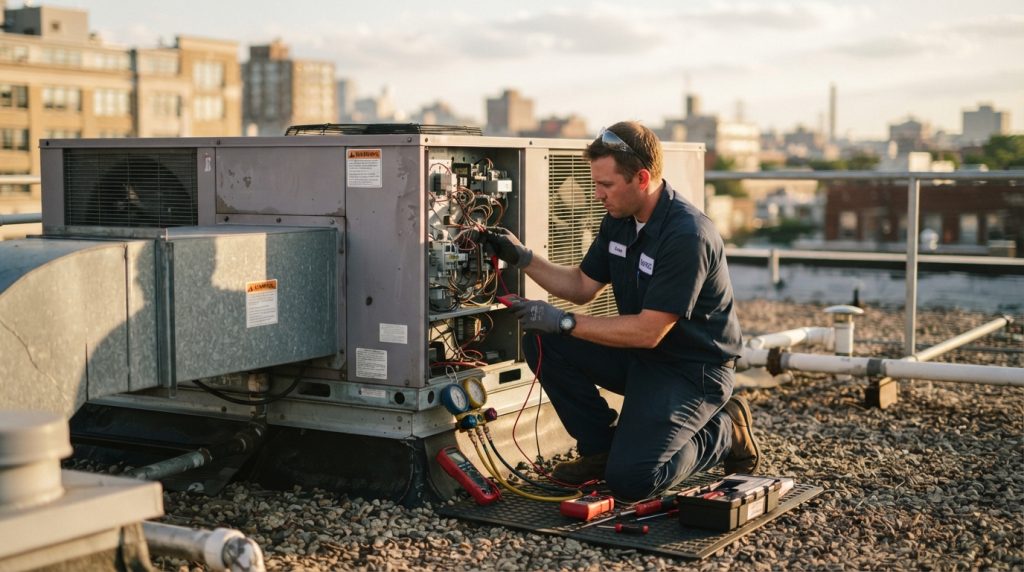
- Rooftop package units combine heating, cooling, and ventilation in a single outdoor unit, often chosen for retail stores and single-story offices.
- Geothermal heat pumps draw stable ground temperatures for heating and cooling, offering lower operating costs in exchange for higher installation investment.
- Boiler systems distribute heat through water or steam, a common fit for older or historic buildings where ductwork retrofits are impractical.
- Variable refrigerant flow (VRF) systems allow zoned temperature control across multiple rooms or floors, useful in mixed-use or multi-tenant buildings.
Each system type carries different maintenance schedules and part availability, which affects how quickly a technician can respond to a midwinter breakdown.
Efficiency Standards and What They Mean for Purchases
Commercial heating equipment is now subject to updated federal minimum efficiency levels. As of January 1, 2025, split-system commercial package air conditioning and heating equipment under 65,000 Btu/h must meet 14.3 SEER2 and 7.5 HSPF2, according to the Federal Register. Space-constrained package units and small-duct high-velocity systems were set to comparable 2025 compliance dates under the same rule.
These updated thresholds matter for budgeting because equipment manufactured before the compliance date may still be sold under older efficiency ratings in limited cases, while newer units are built to the tighter standard from the factory. Building owners replacing aging rooftop units or boilers should confirm the efficiency rating listed on any new equipment quote against current federal minimums before signing a contract.
| System Type | Best Fit | Relative Install Cost | Typical Maintenance Need |
| Rooftop package unit | Retail, single-story offices | Moderate | Seasonal filter and coil checks |
| Geothermal heat pump | Buildings with available land/loop space | Higher | Low, long equipment life |
| Boiler system | Older or historic buildings | Moderate to higher | Annual inspection, water treatment |
| VRF system | Multi-zone, mixed-use buildings | Higher | Per-zone unit servicing |
Planning for Winter Readiness in North Haven, CT
Connecticut winters put sustained demand on commercial heating equipment, and a system that is undersized or poorly maintained is more likely to fail during the coldest stretches of the season. Business owners who schedule heating inspections before the cold season starts reduce the odds of an emergency shutdown affecting customers or staff.
A few planning steps apply to most commercial properties:
- Confirm the heating system’s rated capacity matches current building square footage, especially after any renovation or tenant change.
- Review service agreements for response-time commitments during high-demand winter weeks.
- Ask whether replacement parts for the installed system are readily stocked locally or require special order.
Buildings that have changed use since the heating system was installed, such as an office converted to retail, are especially prone to mismatched capacity.
Frequently Asked Questions
How often should a commercial heating system be inspected? Most manufacturers and service providers recommend at least one annual inspection before the heating season begins, with additional checks for systems running continuous shifts.
Is a boiler or a rooftop unit better for an older building? Boiler systems are often preferred for older or historic buildings because they avoid the ductwork modifications that rooftop units typically require.
Do new efficiency standards apply to existing equipment already installed? No. The January 2025 minimum efficiency requirements apply to equipment manufactured on or after the compliance date, not to systems already in service.
What size business needs a VRF system instead of a standard rooftop unit? VRF systems tend to suit multi-tenant or mixed-use buildings needing independent temperature control across several zones, rather than a single open floor plan.
Business Information and Local Service Notes
Based in USA, Nero Air Conditioning & Heating Inc. serves customers across North Haven, CT, providing a point of reference for commercial heating inquiries in the area.
Additional published details, including Visit Nero Air Conditioning & Heating Inc. site, outline equipment brands and service options referenced in this guide.