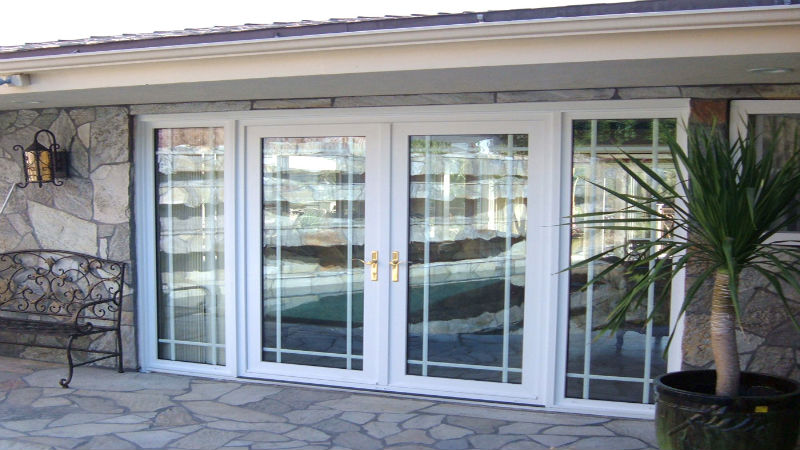
A front door with sidelights and a surrounding wood frame is often best evaluated as one connected entry system rather than as several unrelated surfaces. Because the door, sidelights, trim, and surrounding wood may age at different rates, refinishing requires careful preparation and coordination to create a balanced appearance.
In Phoenix, AZ, exposure to sunlight, heat, and changing outdoor conditions can affect different areas of an entry unevenly. The main door may show heavier wear, while protected sections around the sidelights or surround retain more of their original color and finish. A well-planned refinishing process accounts for these differences before stain and protective finish are applied.
Why Should the Entire Entry Be Evaluated Together?
Even when the main door shows the most noticeable wear, the surrounding components can influence how the finished entry looks.
For example, a door may have faded significantly while the wood around the sidelights remains darker. Refinishing only the most visibly worn section can sometimes make the difference between the surfaces more noticeable.
Looking at the entire entry allows door refinishers to evaluate:
-
Differences in existing color
-
Areas of fading or worn finish
-
Cracks, splits, or other surface damage
-
Differences in sun and weather exposure
-
Condition of the wood around decorative glass
-
Previous stains or protective coatings
-
Areas that may require additional preparation
This evaluation helps determine whether all components should receive the same level of work or whether certain sections need more focused preparation.
How Does Inspection Guide the Refinishing Process?
Inspection is the first step because not every section of an entry ages in the same way.
The main door may receive direct afternoon sunlight, while sidelights remain partly shaded by an overhang. Lower sections can also experience different levels of exposure than upper panels or surrounding trim.
Before beginning front door refinishing, Desert Rose Door explains that they assess the condition of the existing finish, the wood surface, moisture concerns, and areas requiring repair. This assessment helps determine how much preparation each part of the entry needs.
The goal is not simply to treat every surface identically. Instead, the process should respond to the actual condition of each component while still working toward a coordinated final appearance.
Why Is the Existing Finish Removed Before Sanding?
Removing the existing finish and stain helps expose the underlying wood while reducing the amount of material that needs to be removed during sanding.
This is especially important around sidelights, recessed details, trim, and other architectural features where careful preparation matters.
Once the previous finish has been stripped away, the condition and natural variation of the wood become easier to evaluate. Areas that appeared similar before preparation may reveal different tones, previous repairs, or uneven aging.
Removing the old finish first also helps create a more suitable surface for the next stages of entry door refinishing.
How Are the Door, Sidelights, and Surround Sanded?
Sanding prepares the wood to accept stain and protective finish. It also helps smooth the surface after the previous coating has been removed.
A large, flat door panel may be relatively straightforward to prepare, but sidelights and surrounding wood often include narrower sections, corners, edges, molding, and detailed profiles. These areas require controlled preparation so that their shape and character remain intact.
If cracks, splits, or other damage are identified during the process, repairs can also be completed before staining begins.
The amount of sanding may vary from one area to another. A heavily exposed section may require different preparation from a section that has remained protected.
How Is Stain Coordinated Across the Entire Entry?
Stain is applied after preparation and repairs are complete.
One of the challenges with refinishing a complete entry system is that individual pieces of wood may not absorb stain in exactly the same way. Natural grain, age, previous exposure, and prior finishes can all influence the final appearance.
The objective is usually visual coordination rather than assuming every piece of wood will become perfectly identical.
Homeowners may choose a stain similar to the existing tone or select a different color to update the appearance of the entry. Careful application across the door, sidelights, and surround helps the separate components read as one intentional design.
How Is the Refinished Entry Protected?
Once the desired stain has been achieved, protective finish is applied.
The number of layers may depend on the amount of exposure the entry receives. In Phoenix, one section of the doorway can receive substantially more direct sunlight than another, so the condition and location of each surface matter when determining how the protective finish is applied.
A high-UV protective finish helps shield the refinished wood from environmental exposure while preserving the completed stain.
This step is particularly important because the entry contains multiple connected surfaces. Consistent protection helps the door, sidelights, and surrounding wood continue to function visually as a unified feature.
What Happens During the Final Inspection?
After the finish has dried, the entry is inspected again.
Any necessary touch-ups can be addressed, and the hardware is returned to its proper position. If the main door was removed during the work, it can be rehung and checked for proper alignment within the frame.
The final review also provides an opportunity to examine how the door, sidelights, and surrounding wood look together rather than evaluating each component separately.
Why Does a Whole-Entry Approach Matter?
A front entry is more than the door slab alone. Sidelights, trim, surrounding wood, decorative details, and the door itself contribute to one architectural feature.
When these components are considered together, door refinishing can address uneven aging while preserving the visual relationship between each section.
For Phoenix homeowners with a detailed wood entry, evaluating the complete doorway before work begins can help determine which surfaces need attention and how the refinishing process should be coordinated.
If your front entry includes sidelights, surrounding wood, or other connected architectural details, consider having the entire entry evaluated before deciding which sections should be refinished.