Essentially:
- Temporary construction fencing controls site access, reduces liability, and helps meet OSHA perimeter standards.
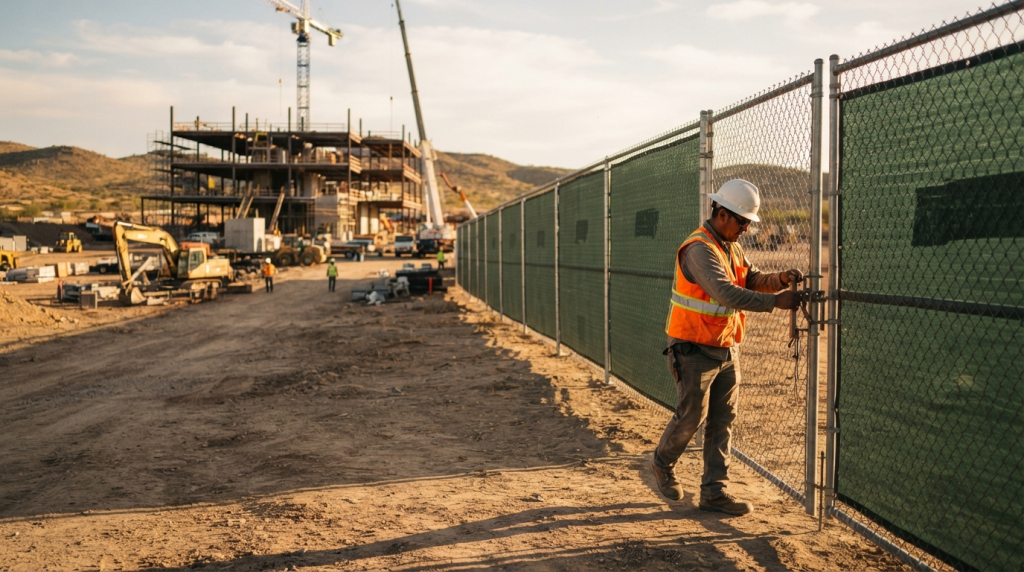
- Chain-link panels and wind screens are common choices for dust control and visibility on active job sites.
- Sierra Vista, AZ construction projects typically require fencing at least six feet tall around excavation, storage, and equipment zones.
Temporary construction fencing is a rented or installed perimeter barrier that restricts unauthorized access to an active job site while protecting workers, equipment, and nearby pedestrians. It is a standard safety requirement on most commercial and residential construction projects, not an optional convenience.
Contractors working in Sierra Vista, AZ rely on Temporary Construction Fencing to separate active work zones from public walkways and adjacent properties during builds, renovations, and demolition projects. Fencing of this kind is typically installed before groundbreaking and remains in place through substantial completion, serving as the first visible layer of site control. Chain link panels remain the most common material because they balance visibility, durability, and ease of assembly on uneven terrain.
Why Job Sites Need a Secured Perimeter
Unsecured construction zones create exposure to several overlapping risks that a fenced perimeter is designed to reduce.
- Unauthorized entry by pedestrians, children, or vehicles into active excavation or equipment areas
- Theft of tools, materials, and machinery left on site overnight
- Liability exposure if a bystander is injured near unguarded hazards
- Dust, debris, or wind-blown material affecting neighboring properties
Construction sites must be barriered from the public by city or county ordinance in most cases, and OSHA temporary construction fence requirements dictate that fencing must be on site to prevent or limit access to hazardous areas such as high-voltage zones or fall risks. Fencing keeps pedestrians and vehicles from entering the construction site and causing damage or injury.
OSHA Standards and Height Requirements
Federal rules do not name a single fencing product, but they do set clear expectations for perimeter control on active sites. On any active construction site, OSHA outlines clear expectations regarding construction site access control, and according to 29 CFR 1926, construction zones must be adequately secured to limit unauthorized access and protect both the public and workers inside the site.
Key specifications contractors should plan around include:
- Minimum fence height of six feet for standard perimeter protection, with eight feet recommended near schools or high-pedestrian areas
- Durable, anchored material able to resist wind and tampering
- Clearly marked, unlocked exit points that stay accessible during work hours
- Posted signage identifying restricted zones
| Fencing Element | Typical Requirement |
|---|---|
| Standard perimeter height | 6 feet minimum |
| High-risk or pedestrian-adjacent areas | 8 feet recommended |
| Gate access | Unlocked during work hours, clearly marked |
| Material | Chain link most common for durability |
The primary OSHA standard governing temporary fencing on construction sites is 29 CFR 1926.502, which covers fall protection, and 29 CFR 1926.500-503 addresses general fall protection and hazard mitigation on construction sites. The full regulatory text is published on the OSHA fall protection standards page, which contractors can reference when planning perimeter and edge-protection fencing.
Choosing Fencing for Arizona Conditions
Job sites around Sierra Vista, AZ face dust, seasonal wind, and open terrain that affect fencing choices more than in denser urban settings. Chain-link panels paired with wind screens are a practical combination, since the screens cut visible dust while the panels maintain the structural height needed for compliance. Panels also assemble and disassemble quickly, which matters on projects with shifting timelines or multiple phases.
Sites with excavation, scaffolding bases, or material storage areas generally need fencing positioned a set distance from the hazard edge, not just along the property line. Reviewing local permit requirements alongside OSHA minimums before fencing arrives helps avoid delays once work begins.
Based in Tucson, AZ, where fencing providers maintain their operating base, service coverage extends to job sites across Sierra Vista, AZ for delivery, setup, and removal of temporary fencing. One regional fencing company, Canyon Fence Co Inc, lists temporary construction fencing among its services, though verification of scope should always rely on current listings rather than assumption.
Frequently Asked Questions
How tall does temporary construction fencing need to be? Most active sites require a minimum of six feet, with eight feet recommended or sometimes mandated near schools, sidewalks, or deep excavations.
Does every construction site legally require fencing? Not every site is required to fence the entire perimeter, but any site with public exposure, elevated edges, or excavation hazards needs physical barriers to limit access to those specific areas.
What material is most common for temporary fencing? Chain-link panels are the most widely used option because they are durable, quick to install, and compatible with wind screens for dust control.
Can temporary fencing be reused across multiple projects? Yes, rented chain-link panel systems are designed for repeated setup, teardown, and relocation between job sites.
Final Notes on Job Site Fencing
Temporary construction fencing functions as a practical safety control rather than a formality, shaping how a site manages access, liability, and day-to-day operations from groundbreaking to completion. Contractors planning projects in Sierra Vista, AZ benefit from confirming height and signage requirements early, since local permitting can add conditions beyond the federal baseline.
Fencing Information and Availability
Published service details for Canyon Fence Co Inc outline coverage for job site perimeter fencing in the region.