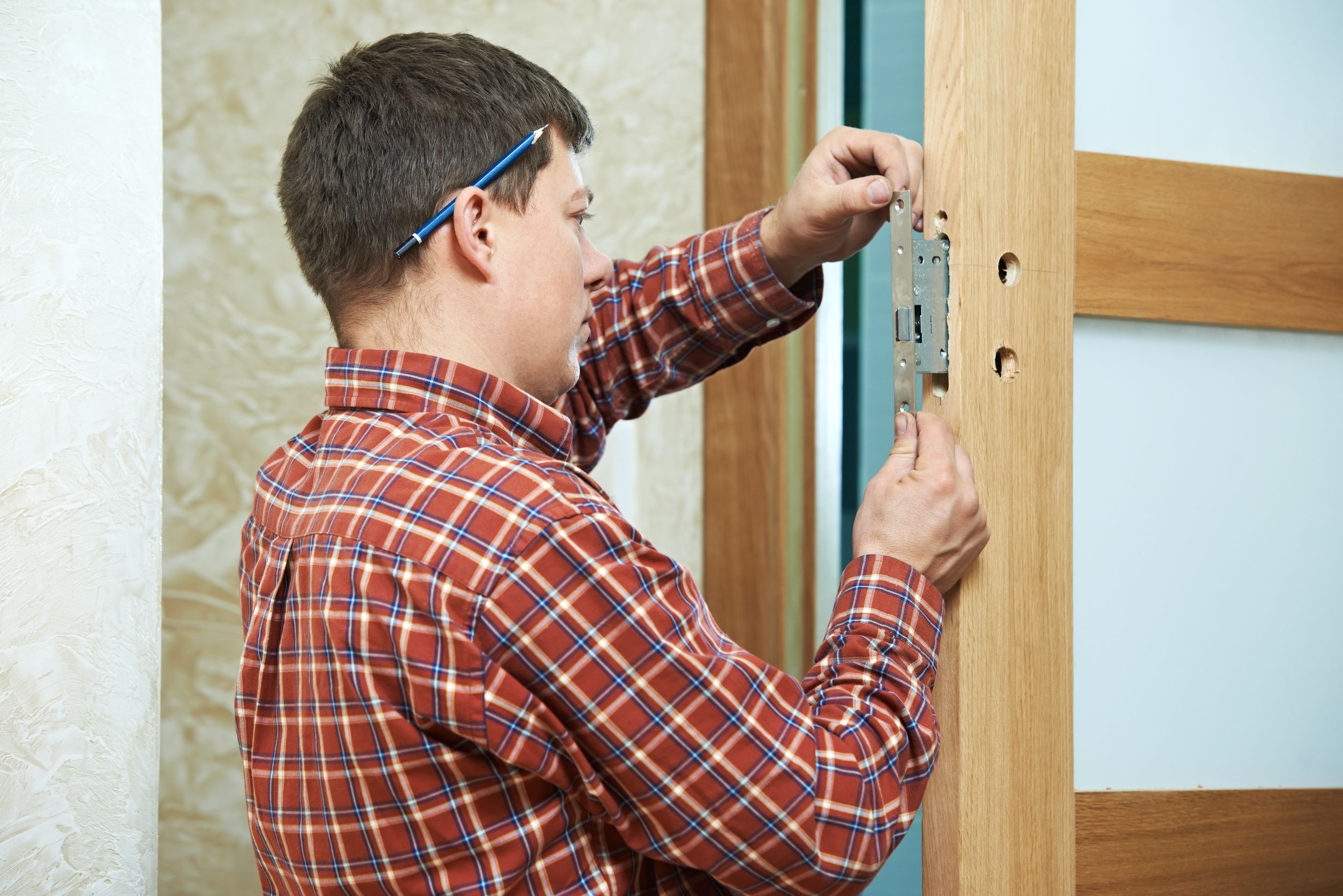
Front door hardware should blend in when the door’s wood grain, glass, or carved details are already the main visual focus. It should become a design feature when the entrance needs stronger contrast, clearer visual hierarchy, or a distinctive architectural accent.
For Phoenix homeowners, the right approach depends on the door’s scale, material, style, and surrounding exterior. Hardware is functional, but its shape, finish, and placement can significantly change how a custom entry door is perceived.
When Should Front Door Hardware Blend In?
Hardware often works best as a supporting element when the door already contains several strong visual features. A richly figured wood surface, detailed panels, decorative glass, or carved accents may need understated hardware to prevent the entrance from looking overly busy.
Blending in does not mean the hardware should disappear completely. It means its proportions and appearance should support the door without becoming the first thing a visitor notices.
A restrained handle or entry set may be appropriate when:
-
The wood grain is highly expressive
-
The door includes intricate carving
-
Glass is the primary focal point
-
The surrounding architecture is already detailed
-
The entrance follows a calm, minimalist design
-
Several metal elements are visible nearby
In these cases, hardware with simple lines and a finish related to nearby fixtures can maintain visual order.
When Should Hardware Become a Focal Point?
Hardware can become a design feature when the door itself has a simpler surface or when the entrance needs a stronger visual anchor. A large pull, distinctive handle shape, or substantial metal plate may provide contrast against broad areas of natural wood.
This approach is common on a modern front door, where limited paneling and restrained detailing leave room for one carefully selected accent. A long vertical pull can emphasize height, while a horizontal handle may reinforce the width of a broad pivot-style entrance.
Feature hardware may also help a door remain visible within a deep or shaded entryway. A contrasting metal element can guide visitors toward the handle and make the entrance easier to understand from a distance.
The hardware should still feel proportionate. A dramatic design that overwhelms the door can weaken the overall composition.
How Should Hardware Scale Relate to the Door?
Scale is one of the most important considerations. Standard-sized hardware may appear too small on an oversized or tall door, while a large pull can look disproportionate on a narrow entrance.
The handle should relate to:
-
Door height
-
Door width
-
Panel dimensions
-
Glass placement
-
Stile width
-
Viewing distance
-
The scale of nearby exterior features
A tall custom front door may support a longer pull that reinforces its vertical proportions. A traditional paneled door may work better with a smaller, more detailed entry set positioned within the established panel layout.
Double doors require additional coordination. The hardware should help identify the active door without making the pair feel visually unbalanced. Matching pulls can create symmetry, while functional components can remain carefully integrated.
Should Hardware Match Other Exterior Metals?
Front door hardware does not need to match every metal element exactly, but it should generally relate to the broader exterior palette. Nearby features may include light fixtures, window frames, gates, railings, address numbers, and garage-door hardware.
Coordination can come from similar undertones or levels of contrast. Dark hardware may connect with black-framed windows, while warmer metal tones may relate to architectural details with a softer appearance.
Using too many unrelated metal finishes can make the entrance feel fragmented. However, forcing an exact match may also be unnecessary, especially when fixtures come from different manufacturers or were installed at different times.
A consistent visual family is usually more practical than attempting perfect duplication.
How Does Wood Influence Hardware Selection?
Wood color and grain affect how hardware appears. Dark hardware may create a subtle effect on deep-toned wood but stand out strongly against a lighter natural surface. Bright or reflective metal can become more prominent when placed against calm, straight-grain wood.
The character of the wood matters as much as its color. A heavily textured or rustic surface may suit hardware with greater visual weight. Smooth, clean-lined wood may work with simpler geometric designs.
On unique front doors, the hardware can either reinforce the wood’s character or provide contrast. A handcrafted entry with expressive grain may benefit from understated hardware, while a simple custom wood door may use a bold pull as its defining detail.
How Should Hardware Work With Glass?
Hardware placement must be coordinated with any glass panels in the door. A handle positioned too close to glass may create awkward proportions or reduce the sense of privacy around the entry point.
Vertical pulls often work well beside narrow glass sections because both elements reinforce height. On doors with broad central glass, hardware may need to remain visually quiet so the glazing stays dominant.
The shape of the hardware can also repeat the glass geometry. Rectangular pulls may relate to clean divided panes, while more traditional entry sets may complement arched or decorative glass.
Functional requirements remain important. The handle should be comfortable to operate and positioned where it does not interfere with the door’s structural components.
Does Architectural Style Determine the Best Approach?
Architectural style strongly influences whether hardware should blend in or stand out.
Modern homes often use simplified hardware with strong geometric shapes. The hardware may become a visible design element, particularly on custom entry doors with broad wood surfaces and limited ornamentation.
Traditional homes may use more detailed entry sets that coordinate with paneled doors, symmetrical façades, and formal exterior features. Spanish-style or Southwestern homes may support heavier hardware that relates to gates, beams, masonry, or decorative metalwork.
Transitional homes can combine a classic door proportion with cleaner, more restrained hardware. The result should connect the traditional and contemporary elements rather than favoring one direction too strongly.
What Functional Details Should Be Considered?
Appearance should not be considered separately from use. Front door hardware must be comfortable, accessible, durable, and appropriate for the door’s dimensions and weight.
Homeowners should review:
-
Grip comfort
-
Handle height
-
Lock placement
-
Clearance from the frame
-
Ease of operation
-
Compatibility with the door construction
-
Exposure to direct sun
-
Accessibility for household members
-
Integration with entry technology
Phoenix sunlight can also affect how hardware feels during the day. Dark metal exposed to direct afternoon sun may become noticeably warm, particularly on west-facing entrances. Shade, recess depth, and orientation should therefore be part of the decision.
Can Hardware Add Luxury Without Excessive Detail?
A luxury front door does not require ornate hardware. Luxury often comes from proportion, material quality, precise placement, and how well the hardware integrates with the door.
A single substantial pull may create more impact than several competing decorative elements. Similarly, a refined entry set can elevate a paneled door without drawing attention away from the wood.
The strongest designs establish a clear hierarchy. The door may be the focal point, with hardware serving as a supporting accent, or the hardware may become the primary detail on a restrained door surface. Both approaches can be successful when they are intentional.
Anasazi Architectural Door creates made-to-order entry designs for Arizona homes, allowing hardware, wood, glass, and proportions to be considered together. Their approach to a luxury front door can help homeowners evaluate the entire entrance rather than selecting hardware as a separate final detail.
The best front door hardware is not automatically the boldest or the most discreet. It is the option that supports the door’s architecture, remains comfortable to use, and gives the entrance a clear and balanced visual identity.