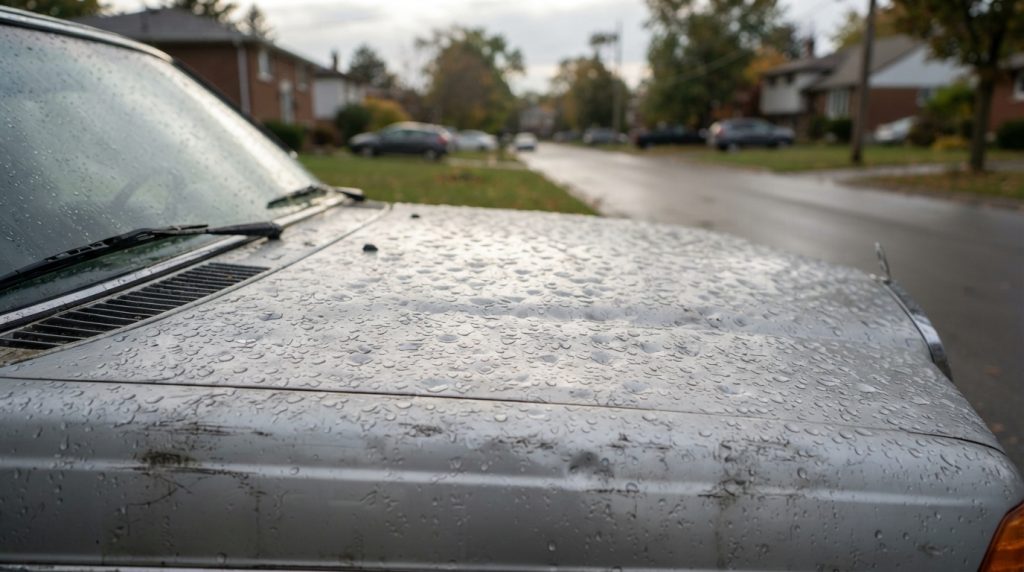
Quick summary:
• Vehicle hail damage ranges from shallow dings to deep dents and cracked paint, with repair method depending on severity and panel access.
• Paintless dent repair is the most common fix for hail dents when paint remains intact, while conventional bodywork is needed for cracked or chipped finishes.
• Denver, CO drivers face a higher-than-average hail risk during spring and summer storm seasons, making prompt inspection after a storm worthwhile.
Vehicle hail damage refers to the dents, dings, and occasional paint cracking that result when hailstones strike a car’s body panels, hood, or roof. Repair options generally fall into two categories: paintless dent repair for intact paint surfaces, and traditional body filler and repainting when the surface has cracked or chipped.
Addressing Vehicle Hail Damage Denver, CO quickly matters because dents left unaddressed can trap moisture against the metal, raising the risk of rust forming at the point of impact over time. Insurance carriers also frequently set deadlines for filing hail-related claims, so a timely inspection after a storm can affect whether repair costs are covered.
How Hail Damages Vehicle Panels
Hailstones strike metal and composite panels with enough force to deform the underlying structure without always breaking the paint layer. The severity of damage depends on stone size, wind speed, and the angle of impact.
• Small dings (dime to quarter size): shallow indentations that typically leave paint intact.
• Moderate dents (half-dollar to golf ball size): deeper indentations that may stretch the metal.
• Severe damage (larger stones or direct high-speed impact): cracked paint, creased panels, or damaged trim and glass.
Front Range storm patterns make this a recurring concern for Denver, CO drivers. NOAA storm event records compiled for Denver County show an average of roughly 10 hail events of one inch or larger per year over the past decade, according to hail storm history data drawn from the NOAA NCEI Storm Events Database. Storm activity in the area tends to peak between May and July, which is when most hail-related vehicle damage claims are filed.
Repair Methods Compared
Choosing the right repair method depends on whether the paint surface is broken and how deep the dents are. The table below outlines the main differences between the two primary approaches.
| Repair Method | Best For | Paint Condition Required | Typical Turnaround |
| Paintless dent repair | Shallow to moderate dents | Paint must be unbroken | Often same-day to a few days |
| Conventional body repair | Cracked paint, creases, deep dents | Works regardless of paint condition | Several days to over a week |
| Panel replacement | Severe structural damage | Not applicable | Longer, depends on parts availability |
Paintless dent repair works by accessing the backside of a panel and gently massaging the metal back toward its original shape, a method widely documented as effective for hail damage as long as the paint layer remains unbroken, as described in general technical overviews of the process. Conventional repair becomes necessary when paint has cracked, chipped, or when a dent is too deep or sharply creased for paintless methods to fully correct.
What to Expect During the Repair Process
A typical hail damage repair follows a predictable sequence, though timelines vary based on vehicle condition and shop workload.
1. Inspection and damage assessment, often including a count of dents per panel.
2. Insurance documentation, since many claims require photos and an itemized estimate.
3. Repair work itself, using paintless methods, conventional bodywork, or a combination.
4. Quality check and final wash or detail before return to the owner.
Vehicles with dozens of small dents across the hood, roof, and trunk can take longer to assess than a single deep dent, since each panel is typically evaluated separately for repair method. Reviewing repair estimates against insurance coverage before work begins helps avoid unexpected costs, particularly for owners carrying comprehensive coverage with a deductible.
Frequently Asked Questions
Does insurance typically cover vehicle hail damage? Comprehensive auto insurance policies generally cover hail damage, though coverage depends on the specific policy and deductible amount.
Can paintless dent repair fix every hail dent? No. Paintless dent repair works only when the paint surface is unbroken and the dent is not too sharply creased; cracked paint or structural creases usually require conventional repair.
How long after a hailstorm should a vehicle be inspected? Prompt inspection is generally advisable, since documenting damage soon after a storm supports insurance claims and helps prevent moisture-related issues like rust from developing.
Is hail damage always visible immediately? Not always. Small dents can be difficult to spot without close inspection in good lighting, particularly on textured or dark-colored panels.
Business Info and Next Steps
Operating from the United States, Elevate Hail & Dent Repair is an auto body shop offering paintless dent repair, hail damage repair, door ding repair, and dent removal services, serving the greater Denver, CO area.
Additional details on repair processes and service areas can be found by visiting the listing directly, and readers can Click Here to view location and contact information.

