In short:
- Replace a fence when rot, leaning posts, or repeated repairs affect more than a small section of the structure.
- Wood fences typically need replacement sooner than vinyl, aluminum, or chain link due to moisture and freeze-thaw stress.
- Kane County and many local municipalities require a permit for privacy fences, so check requirements before replacing a fence in Elgin, IL.
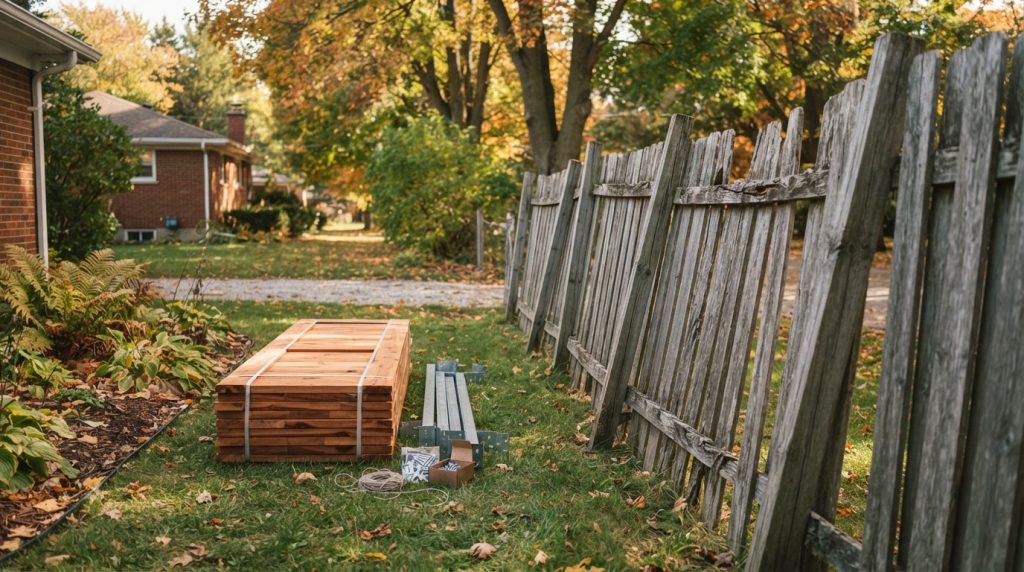
A fence usually needs replacement once structural damage, such as rotted posts, extensive leaning, or widespread cracking, makes repair less practical than installing a new one. Fencing Replacement typically becomes the better option when more than 20 to 30 percent of the structure is compromised, since patching individual boards no longer restores stability or appearance.
Fencing Replacement in Elgin, IL decisions often come down to a simple comparison: the cost of continued repairs versus the cost of a new installation. Fence Connection, Inc. lists wood, vinyl, aluminum, chain link, and wrought iron fence installation among its services, which reflects the range of materials homeowners in the region typically choose between when a fence reaches the end of its service life.
Signs a Fence Has Reached the End of Its Life
Certain warning signs point clearly toward replacement rather than repair.
- Rot or decay affecting multiple boards or posts. Soft, crumbling wood or dark fungal patches near the base of a fence indicate the structure is no longer sound, and replacement restores both safety and curb appeal, according to a February 2025 update from Frame It All.
- Leaning or sagging sections. Posts that tilt due to rot, shifting soil, or storm damage often signal a failing foundation rather than a problem a quick fix can solve.
- Frequent, recurring repairs. Constantly replacing boards, resetting posts, or repainting every season tends to cost more over time than a single replacement project.
- Rust or corrosion on metal fencing. Surface rust can sometimes be treated, but extensive corrosion on welds or posts usually means the section needs full replacement.
How Long Different Fence Materials Typically Last
Material choice has a major effect on how soon replacement becomes necessary, especially in a climate with freeze-thaw cycles like northern Illinois experiences.
| Fence Material | Typical Lifespan | Common Failure Signs |
| Pressure-treated wood | 10 to 20 years | Rot, warping, post failure |
| Cedar wood | 15 to 25 years | Splitting, discoloration near ground level |
| Vinyl | 20 to 30+ years | UV cracking, discoloration, bowing posts |
| Aluminum or wrought iron | 30 to 50+ years | Weld damage, dents, rust at joints |
Wood remains popular for its appearance, but its lifespan varies the most of any material because of moisture exposure and seasonal temperature swings. Illinois weather in particular puts repeated stress on wood fencing, since freeze-thaw cycles cause expansion and contraction that gradually weakens boards and posts, as outlined in a 2026 guide on wood fence lifespan.
Permits and Local Requirements Before Replacing a Fence
Replacing a fence in Elgin, IL involves more than choosing a material. Many Illinois municipalities and counties regulate fence height, placement, and permitting separately, since the state does not apply one uniform rule statewide.
- A privacy fence that cannot be seen through generally requires a building permit under Kane County fence permit requirements.
- Fences that can be seen through, such as chain link or split rail, typically do not require a building permit but may still need stormwater approval.
- Corner lots and properties near intersections often face additional sightline restrictions that affect fence height and placement.
- Homeowners associations may add separate material or style requirements beyond municipal code.
Checking local rules before replacement work begins helps avoid delays or having to modify a newly installed fence. Based in USA, Fence Connection, Inc. serves customers across Elgin, IL, and project scope for any replacement should account for both material durability and the permitting rules specific to the property’s municipality.
Frequently Asked Questions
How do I know if my fence needs repair or full replacement? If damage is limited to one or two boards or a single post, repair is usually sufficient. Once rot, leaning, or cracking spreads across multiple sections, replacement tends to be more cost-effective than ongoing patchwork.
Does replacing a fence always require a permit? Not always. Privacy fences that cannot be seen through generally require a permit in Kane County, while see-through fences like chain link often do not, though stormwater rules may still apply.
Which fencing material lasts longest in Illinois weather? Aluminum and vinyl fencing generally outlast wood due to resistance to moisture, rot, and freeze-thaw cracking, while pressure-treated wood and cedar have shorter, more variable lifespans depending on maintenance.
Can a leaning fence be fixed instead of replaced? Minor leaning from a single weak post can sometimes be corrected, but leaning across multiple posts usually points to foundation failure that repair alone will not resolve.
Final Considerations
Published details for Fence Connection, Inc. cover information relevant to property owners evaluating fencing options in the area.
A fence nearing the end of its structural life rarely improves with another round of patch repairs. Reviewing the material’s expected lifespan, checking for the warning signs listed above, and confirming local permit requirements gives homeowners in Elgin, IL a clear path to deciding whether repair or full replacement makes more sense for their property.