Recap:
• A professional exterior paint job follows a set process: inspection, surface prep, priming, and multi-coat application with weather-resistant products.
• Desert conditions in the Marana, AZ area shape timing, product choice, and prep steps more than in milder climates.
• Expect a written estimate, a defined timeline, and documentation of surface repairs before any paint goes on.
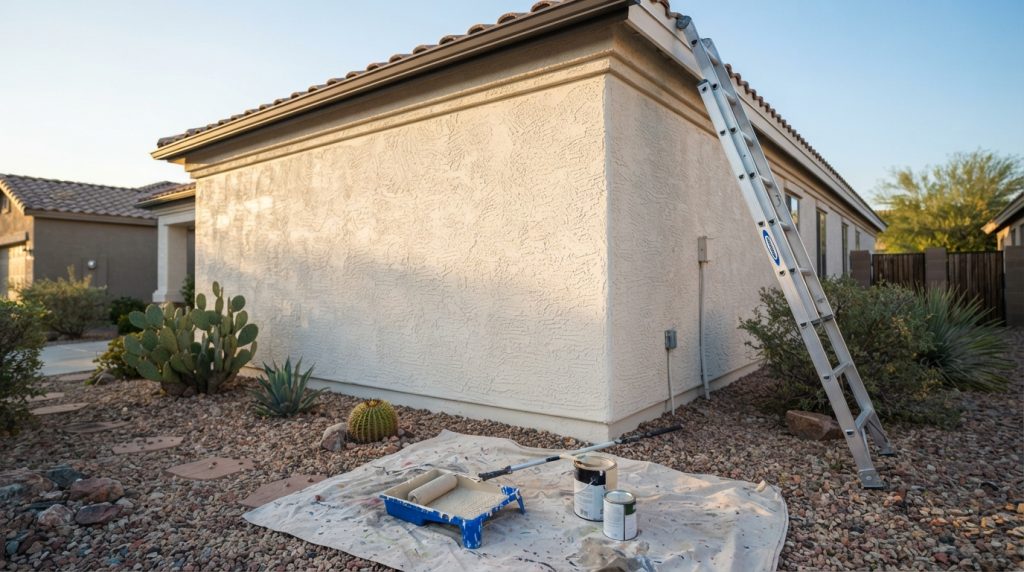
A professional exterior painting job typically includes a property inspection, surface cleaning and repair, priming of bare or damaged areas, and two coats of weather-rated paint applied under conditions that match the manufacturer’s temperature and humidity requirements. The process is sequential, and skipping steps such as pressure washing or crack repair is one of the most common reasons paint fails early in desert climates.
Homeowners searching for exterior painting services are often trying to solve a specific problem: fading stucco, peeling trim, or a home that no longer matches its neighborhood’s color standards. Understanding the steps involved, and the climate factors that affect them in Southern Arizona, makes it easier to evaluate quotes and set realistic timelines before work begins.
The Step-by-Step Process
Exterior painting is not a single task but a sequence of stages, each affecting how long the finish lasts.
1. Inspection and assessment. A contractor walks the property to check stucco, trim, siding, fencing, and other painted surfaces for cracks, peeling, or moisture damage.
2. Surface preparation. This includes pressure washing to remove dust, chalking paint, and caliche buildup, followed by scraping and sanding of failing areas.
3. Repairs and priming. Hairline cracks in stucco, exposed wood, and bare patches get patched and primed before any topcoat is applied.
4. Paint application. Two coats are typically applied using sprayers, rollers, or brushes depending on the surface texture.
5. Final walkthrough. A completed job should include a review of edges, trim lines, and coverage before the crew leaves the site.
Why Marana’s Climate Changes the Approach
Desert conditions place more stress on exterior coatings than milder climates do, which is why timing and product selection carry extra weight in this region.
• Thermal cycling. Stucco and trim expand and contract with wide swings between daytime heat and cooler nights, which can crack rigid paint films over time.
• UV exposure and fading. Southern Arizona’s intense sun breaks down pigment faster on south- and west-facing walls than on shaded surfaces.
• Monsoon timing. The National Weather Service in Tucson tracks the region’s monsoon season, which generally runs from mid-June through the end of September and brings sudden humidity spikes and rain that can disrupt curing paint.
• Dust and caliche. Pre-paint washing removes the fine dust and mineral buildup common on walls facing unpaved areas or busy roads.
Most contractors in the region schedule exterior work for spring or fall, when daytime temperatures and humidity levels fall within the ranges paint manufacturers specify for proper curing.
Materials and Timeline Expectations
| Factor | What to Expect |
| Paint type | 100% acrylic latex formulated for UV resistance and flexibility |
| Best application season | Spring or fall, avoiding peak summer heat and monsoon humidity |
| Typical coats | Two coats over a primed, repaired surface |
| Surfaces commonly covered | Stucco, trim, siding, fencing, and garage doors |
A written estimate should outline which surfaces are included, the number of coats, and whether repairs such as stucco patching are part of the base price or billed separately. Clear documentation before work starts helps avoid disputes over scope once the crew is on site.
Business Information
Based in the USA, LGND Painting serves customers across Marana, AZ, applying exterior coatings suited to the region’s stucco and trim surfaces. Services referenced in this article, including surface preparation, priming, and weather-resistant topcoats, reflect offerings listed on the company’s profile rather than claims made for marketing purposes.
Frequently Asked Questions
How long does an exterior paint job usually take? Timelines vary by home size and surface condition, but most single-family exterior projects take several days from prep through final coat, weather permitting.
Why does surface prep matter so much in desert climates? Dust, caliche buildup, and chalking paint prevent new coats from bonding properly, which is why pressure washing and repairs come before any primer or paint is applied.
Can exterior painting happen during the summer? It is possible but riskier, since high surface temperatures and monsoon humidity can interfere with proper curing, which is why many contractors favor spring and fall scheduling.
What surfaces are typically included in an exterior job? Common surfaces include stucco, wood or composite trim, fencing, and garage doors, though the exact scope should always be confirmed in a written estimate.
Homeowners evaluating exterior painting options in Marana, AZ can use the process and timing factors above to ask more specific questions when comparing estimates. A clear scope of work, documented repairs, and a schedule that accounts for seasonal conditions are reasonable baseline expectations for any exterior repaint.