Takeaway:
- A professional hearing test typically includes a review of hearing history, an ear exam, and tone or speech-based assessments in a quiet setting.
- Results are plotted on an audiogram that shows the type and degree of any hearing loss.
- Most appointments take under an hour and require no special preparation.
A professional hearing test, also called audiometry, measures how well a person detects sounds at different pitches and volumes to identify whether hearing loss is present and, if so, what type. For residents of Charlotte, NC searching for a Hearing Test, understanding the steps involved can make the appointment feel less unfamiliar. Audiologists at Bowles Hearing Care Services, PC and similar practices in the region follow a standardized process built around established clinical methods used nationwide.
Before the Appointment
A hearing evaluation generally begins with a short conversation about symptoms and history rather than the testing itself.
- Questions about tinnitus, dizziness, or trouble following conversation in noisy rooms
- A review of noise exposure from work, hobbies, or military service
- A visual exam of the ear canal and eardrum using an otoscope to rule out wax buildup or infection
No special preparation is required beforehand, though arriving without earbuds or recent loud noise exposure helps produce more accurate baseline readings.
The Core Testing Process
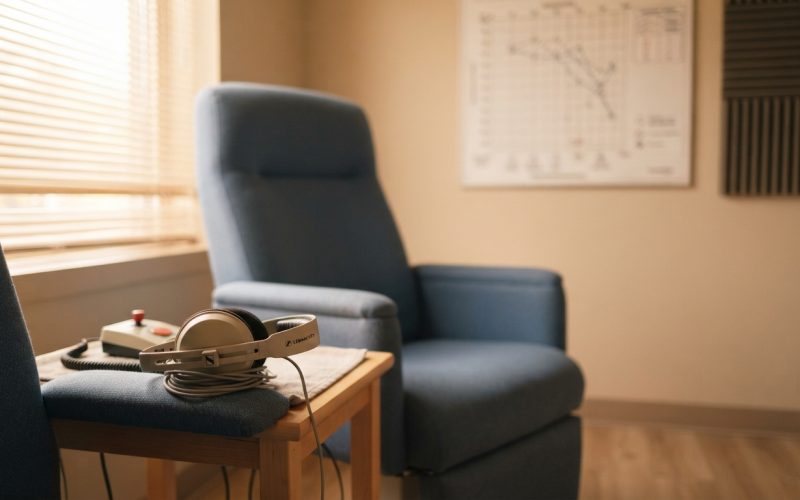
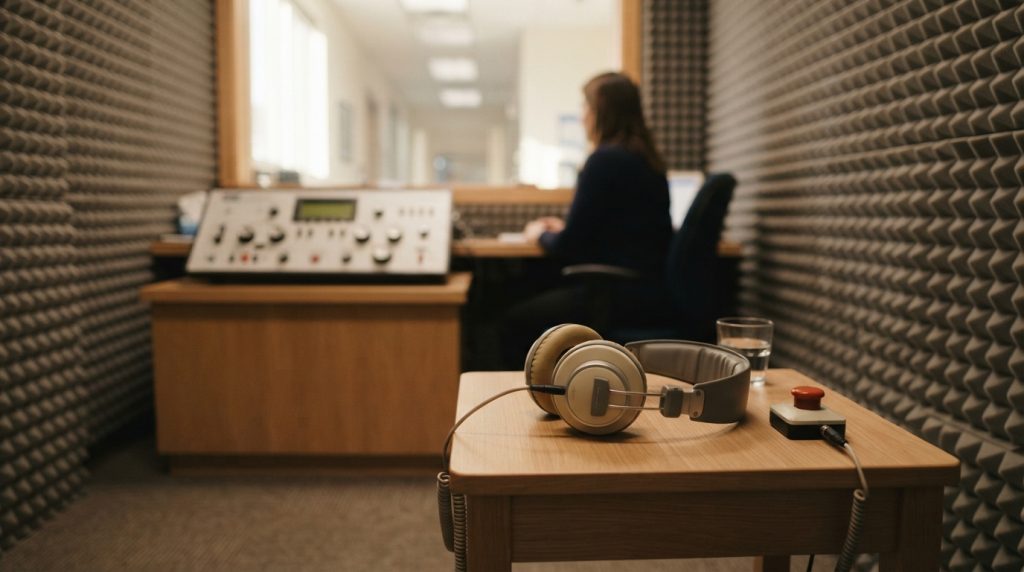
Once the preliminary exam is complete, the actual audiometric testing begins in a quiet or sound-treated space.
1. Pure-tone testing. This common hearing test finds the quietest sounds a person can hear at different pitches, and children and adults may have this test.
2. Response recording. The person being tested raises a hand, presses a button, or says “yes” when they hear sounds, and the audiologist records responses on an audiogram that shows hearing loss and how much hearing loss is present.
3. Bone conduction testing (if needed). This test detects issues with the tiny hair cells in the cochlea, which send vibrations to the auditory nerve.
4. Speech testing. Word recognition at varying volumes helps confirm how clearly speech is understood, not just whether tones are detected.
The results are plotted on a chart comparing frequency to hearing level, which helps the audiologist determine whether the hearing loss is conductive, caused by problems in the outer or middle ear, or sensorineural, caused by problems in the cochlea. According to the Cleveland Clinic, people in consistently loud work environments should have their hearing checked annually, while others may only need periodic testing.
Reading the Results and Next Steps
|
Audiogram Finding |
What It Suggests |
Typical Follow-Up |
|
Normal thresholds across frequencies |
No measurable hearing loss |
Routine recheck in a few years |
|
Reduced thresholds at high frequencies |
Early noise-related or age-related loss |
Monitoring or hearing aid consultation |
|
Reduced thresholds across all frequencies |
Moderate to severe loss |
Hearing aid fitting or further evaluation |
|
Asymmetrical loss between ears |
Possible underlying medical issue |
Referral for additional diagnostic review |
An audiologist reviews these patterns with the patient immediately after testing, explaining what the shape of the audiogram means in plain terms rather than leaving results open to interpretation. This conversation typically includes whether amplification, medical referral, or simple monitoring is the appropriate next step.
How Long It Takes and What to Bring
A standard evaluation usually takes between 30 and 60 minutes, depending on whether speech testing and tympanometry are included alongside pure-tone screening. Patients are generally advised to bring:
- A list of current medications, since some can affect hearing
- Any prior audiogram results for comparison
- Insurance information, if applicable, for coordination of coverage
Because testing conditions in Charlotte, NC clinics are standardized to reduce background noise, results from one visit can usually be compared reliably to future visits, which is useful for tracking gradual changes over time.
Frequently Asked Questions
Is a hearing test painful or uncomfortable? No. The process involves listening to tones or words through headphones and responding; it does not involve needles, pressure, or discomfort beyond occasionally wearing earphones for a short period.
How often should adults get their hearing checked? Recommendations vary by age and noise exposure, so timing should be based on individual risk factors and professional guidance rather than a fixed schedule for everyone.
Can a hearing test diagnose tinnitus? A standard audiogram does not diagnose tinnitus directly, but it helps rule out related hearing loss and can guide further evaluation if ringing or buzzing is also present.
Do I need a referral to schedule one? Most audiology practices, including those serving Charlotte, NC, accept direct scheduling without a physician referral, though insurance plans may have their own requirements.
Scheduling and Local Information
Bowles Hearing Care Services, PC is a hearing care practice based in Charlotte, NC that serves patients throughout the surrounding area, with details available through its Bowles Hearing Care Services, PC business listing.
Published details for Explore Bowles Hearing Care Services, PC on Google include current hours and location information for the Charlotte, NC area.