Short answer:
• A family dentist provides preventive, restorative, and cosmetic care for patients of all ages, from children to seniors, under one practice.
• Core services typically include exams, cleanings, fillings, gum care, and emergency treatment.
• Choosing a practice with broad age-range capability simplifies scheduling and keeps records in one place for a household.
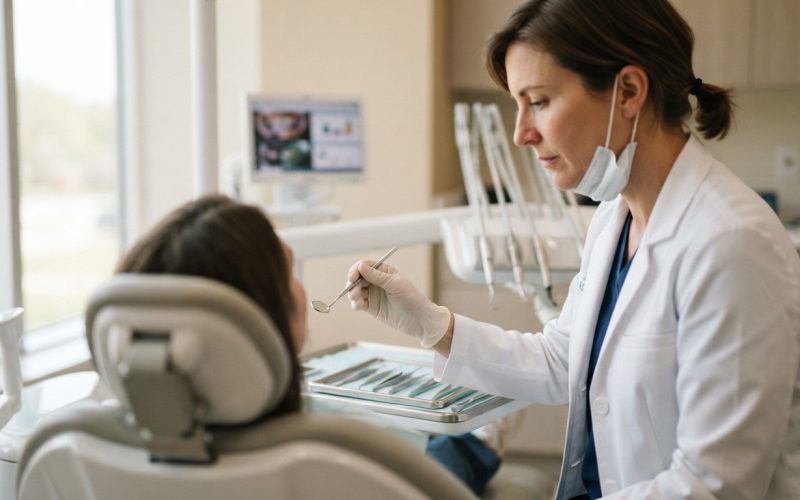
A family dentist is trained to treat patients at every life stage, so one practice can handle a toddler’s first checkup and a grandparent’s denture fitting without referring either to a specialist for routine care. This age-range flexibility is the defining feature that separates family dental practices from offices that treat only adults or children.
For households in Kelowna, this model reduces the logistical burden of coordinating separate dental providers for different family members. Appointments, records, and treatment history stay consolidated, which supports more consistent monitoring of oral health trends over time.
Preventive Care as the Foundation
Preventive visits form the backbone of family dentistry because they catch problems before they require invasive treatment.
• Routine exams and professional cleanings, typically scheduled twice a year.
• Dental X-rays to detect decay or bone loss not visible during a visual exam
• Fluoride treatments and sealants for children and cavity-prone patients
• Oral cancer screenings performed during standard checkups
According to the CDC’s oral health surveillance data, regular preventive dental visits remain a key factor in reducing untreated tooth decay across age groups. Consistent preventive care also allows a dentist to track subtle changes in gum tissue or enamel that might otherwise go unnoticed between visits.
Restorative and Gum Treatment Services
When decay, damage, or gum disease has already developed, restorative services address the problem directly rather than simply monitoring it.
1. Fillings – repair cavities using composite or other materials matched to the tooth’s location and function
2. Root canal therapy – removes infected pulp tissue to save a tooth that would otherwise require extraction.
3. Periodontal treatment – addresses gum inflammation and infection before it progresses to bone loss.
4. Crowns and bridges – restore strength and function to teeth that are fractured, heavily decayed, or missing
Untreated periodontal disease can affect more than the mouth; the National Institute of Dental and Craniofacial Research notes that gum disease is linked to broader systemic health concerns, which is why routine screening matters even for patients without obvious symptoms.
Cosmetic and Emergency Dental Support
Family dental practices often extend beyond basic restorative work to include services that address appearance and urgent situations.
| Service Type | Typical Use Case | Timing |
| Teeth whitening | Discoloration from aging, staining, or lifestyle factors | Elective, scheduled |
| Veneers or bonding | Chipped, gapped, or uneven front teeth | Elective, scheduled |
| Emergency extractions | Severe pain, infection, or trauma | Urgent, same-day when possible |
| Denture fitting and repair | Missing teeth affecting chewing or speech | Scheduled, with follow-up adjustments |
Emergency availability matters, since dental trauma or sudden infection rarely follows a convenient schedule. A practice equipped to handle urgent cases alongside routine care gives patients one point of contact, whether the visit is planned or unexpected.
Frequently Asked Questions
At what age should a child see a family dentist for the first time? Most dental guidance recommends an initial visit around the time the first tooth appears or by a child’s first birthday, whichever comes first.
Can a family dentist handle orthodontic concerns? Many family practices screen for alignment issues and refer patients to orthodontic specialists when more complex correction is needed, though some offer basic orthodontic monitoring in-house.
How often should adults schedule cleanings? Most adults should schedule cleanings twice a year, though those with a history of gum disease may need more frequent visits.
What should happen during a dental emergency outside office hours? Patients experiencing severe pain, swelling, or trauma should seek same-day emergency dental care or urgent medical attention if swelling affects breathing or swallowing.
Final Note
Glenmore Dental is based in the USA and serves patients across Kelowna through published service listings covering general and family dental care. The relationship between the two locations reflects how many dental practices structure their reach: administrative operations in one location while patient-facing service details are published for a broader regional audience.