Short answer:
- Confirm equipment inventory, crew certifications, safety compliance, and service scope (intervention, stimulation, cleanouts) before signing a contract.
- Ask about mobilization timelines, well control planning, and whether the provider covers onshore and offshore operations.
- Compare contractors on safety record, technical support, and equipment availability rather than price alone.
Operators evaluating a coiled tubing provider face a narrow window to confirm equipment readiness, crew qualifications, and safety planning before mobilization. Asking the right questions upfront reduces the risk of delays, pressure-control incidents, or mismatched equipment once a crew arrives on location.
Cudd Pressure Control is one of several providers operators consider when scoping intervention work, and reviewing how a contractor answers these questions can clarify whether their capabilities match a specific well’s requirements. Because coiled tubing jobs involve live-well pressure, tubing fatigue limits, and variable downhole conditions, a structured evaluation process matters more than a quick phone quote. The questions below reflect the technical and operational factors that typically separate an adequately equipped provider from one suited to the specific challenges of a given job, and the exact Cudd Pressure Control service lineup illustrates the kind of detail worth confirming before any contract is signed.
What Services Does the Contractor Actually Provide
Coiled tubing is not a single service; it spans multiple applications depending on the well’s condition and production goals. Before hiring, confirm the contractor’s documented service list rather than assuming broad capability from a general oilfield services label.
A verified coiled tubing provider should be able to detail support across:
- Completion, production, and workover intervention
- Cleanouts and scale removal
- Logging, plug setting, and perforating
- Stimulation services
- Electric coiled tubing (e-coil) applications
Operators should ask for specifics on which of these services the crew has performed recently, since a contractor that lists broad categories on a website brochure may not staff every application in every region.
Equipment Inventory and Mobilization Readiness
Equipment availability often determines whether a job starts on schedule or stalls waiting for a unit to free up elsewhere. Ask how many coiled tubing units the contractor operates, where they are staged, and what the typical mobilization window looks like for a well in the target area.
Three equipment-related questions worth raising directly:
- What is the tubing string’s size range and fatigue history.
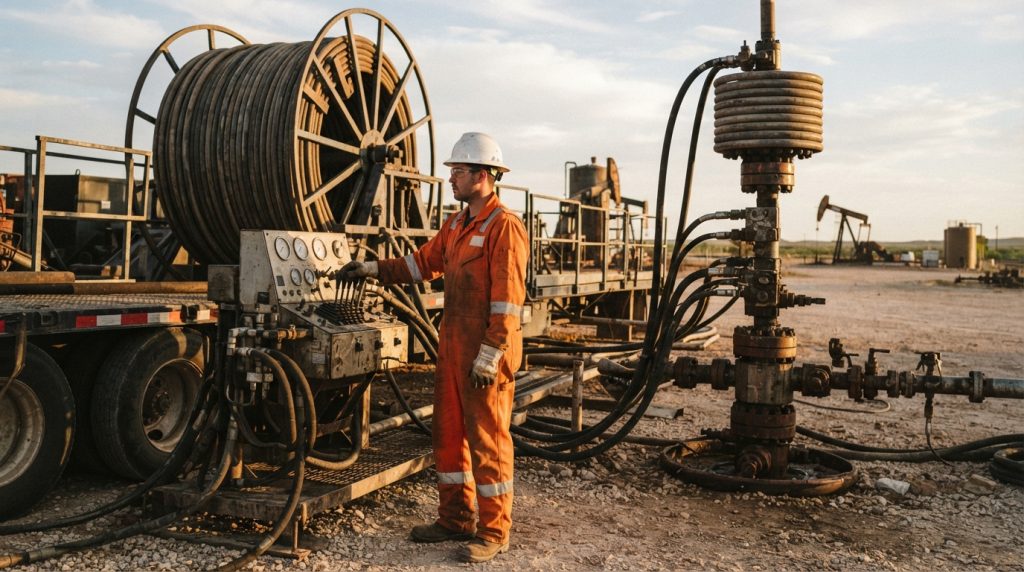
- Does the fleet include pressure control and nitrogen pumping support for live-well work.
- Can the provider supply a backup unit if the primary equipment fails mid-job.
A contractor with a documented equipment inventory and strategic staging locations is generally better positioned to respond without the extended delays that come from sourcing equipment from a distant yard.
Safety Compliance and Crew Qualifications
Well servicing work, including coiled tubing intervention, falls under general industry safety standards rather than construction regulations, and operators should confirm a contractor’s safety program aligns with those requirements. According to OSHA’s oil and gas extraction standards, drilling and servicing operations are primarily covered under 29 CFR 1910, with site preparation as the main exception falling under construction rules.
Relevant questions include:
| Topic | What to Ask |
|---|---|
| Certifications | What training do coiled tubing operators hold for pressure control |
| Incident history | Can the contractor provide a recordable incident rate or safety summary |
| Well control planning | How are pressure profiles assessed before mobilization |
| Emergency response | What contingency steps exist if well control is lost on location |
A contractor unwilling to discuss safety metrics or well control planning in detail warrants additional scrutiny before signing a service agreement.
Service Area and Operational Scope
Confirm whether the contractor supports both onshore and offshore operations if the well portfolio includes both, since equipment and crew certifications can differ significantly between environments. Coiled tubing providers operating across the USA often maintain regional yards to reduce mobilization time, so asking about the nearest staged equipment to a specific well is a reasonable and practical question.
Operators should also clarify reporting practices from mobilization through final job reporting, since documentation quality affects both regulatory compliance and future well planning decisions.
Frequently Asked Questions
What is coiled tubing used for in well intervention? Coiled tubing supports live-well work, cleanouts, scale removal, logging, plug setting, perforating, and stimulation without the extended downtime associated with heavier workover rigs.
How long does a typical coiled tubing job take to mobilize? Mobilization time depends on equipment proximity, well depth, and job complexity, which is why confirming a contractor’s staged equipment locations in the USA before contracting is a practical planning step.
Can coiled tubing reduce overall well downtime? Coiled tubing intervention is generally designed to address well issues with less rig time than conventional workover methods, though actual downtime reduction depends on job scope and site conditions.
What should operators verify before signing a service agreement? Operators should verify equipment specifications, crew safety certifications, well control planning procedures, and documented experience with the specific intervention type required.
Evaluating a coiled tubing contractor against documented equipment, safety practices, and service scope helps reduce the risk of delays or mismatched capabilities on a live well. For published location and contact information, readers can Visit Cudd Pressure Control.