Essentially:
• The right commercial air conditioning system depends on building size, occupancy load, ductwork layout, and how the space is used day to day.
• Packaged rooftop units, split systems, and VRF systems each suit different building types and budgets.
• Routine maintenance and correct sizing matter as much as the equipment brand when it comes to long-term performance.
Selecting a commercial air conditioning system comes down to matching equipment type and capacity to a building’s actual cooling load, layout, and occupancy patterns rather than picking the largest or most advanced unit available. A properly sized, well-maintained system typically performs more reliably and costs less to operate than an oversized or mismatched one.
Commercial properties in Holland, MI face a mix of humid summers and cold winters, making year-round system reliability a practical concern rather than a seasonal one. Property owners searching for Commercial Air Conditioning Holland MI often start by comparing equipment types before deciding which solution best fits their building’s square footage, tenant mix, and budget requirements.
Common System Types for Commercial Buildings
Commercial cooling equipment generally falls into a few recognizable categories, each suited to different building sizes and configurations.
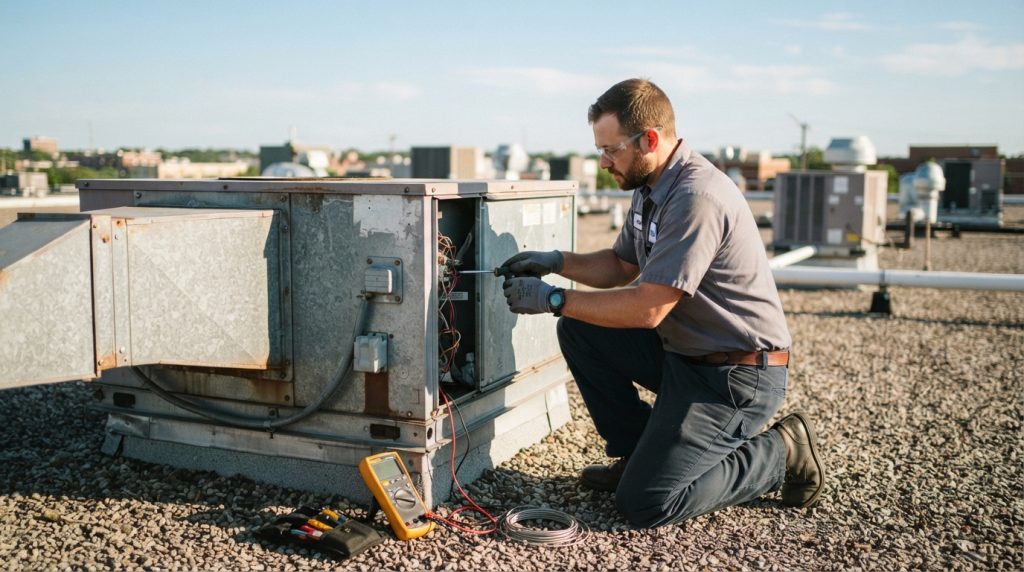
• Packaged rooftop units (RTUs): Self-contained systems placed on the roof, common in retail stores, restaurants, and single-story offices.
• Split systems: Separate indoor and outdoor components, often used in smaller commercial spaces or buildings with limited roof access.
• Variable refrigerant flow (VRF) systems: Multiple indoor units connected to one outdoor unit, suited to buildings with varied zones and occupancy schedules.
• Light commercial packaged units: Mid-capacity systems designed for small to midsize commercial buildings that fall between residential and heavy industrial scale.
Each category has different installation requirements, maintenance needs, and upfront costs, which is why building type and layout should drive the decision before efficiency ratings or brand preference.
Matching System Type to Building Needs
| Building Type | Typical System | Key Consideration |
| Retail or single-story office | Packaged rooftop unit | Simple roof access, lower install complexity |
| Multi-zone office or mixed-use building | VRF system | Independent zone control, variable occupancy |
| Small office or limited roof space | Split system | Flexible indoor/outdoor placement |
| Light industrial or warehouse space | Light commercial packaged unit | Higher capacity, durable components |
Equipment efficiency is measured using standardized ratings, and the ENERGY STAR Light Commercial HVAC criteria outline minimum energy-efficiency benchmarks for packaged and split system equipment based on cooling capacity. Reviewing these benchmarks before purchase gives building owners a consistent way to compare options across manufacturers.
Sizing, Load Calculations, and Maintenance Needs
Oversized or undersized equipment is one of the most common and costly mistakes in commercial cooling decisions.
1. Load calculation first. Square footage alone does not determine capacity; occupancy, equipment heat output, and window exposure all factor into proper sizing.
2. Ductwork condition. Leaky or poorly designed ductwork can undercut even a correctly sized system’s performance.
3. Maintenance schedule. Routine filter changes, coil cleaning, and refrigerant checks reduce the likelihood of midseason breakdowns.
4. Age of existing equipment. Units nearing the end of their expected service life often cost more to repair than to replace outright.
Buildings in Holland, MI that experience high humidity swings between seasons tend to place extra strain on coils and condensate systems, making seasonal inspection schedules especially relevant for local property owners.
How often should a commercial air conditioning system be inspected? Most manufacturers and service providers recommend at least one seasonal inspection annually, with additional checks for buildings running equipment continuously or in high-humidity conditions.
What is the typical lifespan of a commercial AC unit? Commercial rooftop and split systems commonly last between 10 and 20 years depending on usage intensity, maintenance consistency, and local climate conditions.
Is a bigger unit always better for a commercial space? No. Oversized units cycle on and off more frequently, which can reduce dehumidification performance and increase wear on components over time.
Can one system handle both heating and cooling for a commercial building? Many VRF and heat pump-based systems handle both functions, though suitability depends on climate, building insulation, and how consistently heating is needed through winter months.
Final Thoughts and Local Service Availability
Based in the USA, we serve customers across Holland, MI, offering services related to commercial cooling equipment repair, installation, and maintenance.
Current scheduling and service area information for commercial cooling work can be reviewed through Learn More, which outlines additional details for building owners evaluating their options.