In short:
• Unusual smells, sounds, or soot around a furnace often signal mechanical wear or combustion problems that require prompt inspection.
• Rising energy bills, uneven heating, or a furnace that cycles too often can point to failing components rather than normal aging.
• Federal safety guidance recommends annual professional inspection of fuel-burning heating equipment to reduce carbon monoxide risk.
A furnace that short-cycles, makes grinding or screeching noises, or produces a burning smell is signaling a problem that should not wait for a routine tune-up. These symptoms often indicate mechanical wear, airflow restriction, or combustion issues that can worsen quickly once outdoor temperatures drop.
Homeowners searching for Residential Heating Services Grandville MI are often trying to determine whether a strange noise, unusual odor, or sudden spike in utility costs is a minor issue or a sign of a more serious problem. Recognizing these warning signs early can help prevent minor heating issues from turning into complete system failures during the coldest part of the season.
Warning Signs That Point to a Failing Heating System
Several symptoms consistently show up before a furnace breakdown. Watching for these early indicators gives homeowners time to schedule service before a minor issue becomes an emergency.
• Unusual odors : A burning dust smell at startup is common, but a persistent sulfur or metallic odor may indicate a gas leak or overheating component.
• Strange noises : Banging, screeching, or rattling sounds often point to loose parts, a failing blower motor, or a cracked heat exchanger.
• Frequent cycling : A furnace that turns on and off repeatedly may have a clogged filter, failing thermostat, or improperly sized system.
• Yellow or flickering pilot light : A healthy gas flame burns blue; yellow flickering can signal incomplete combustion and carbon monoxide risk.
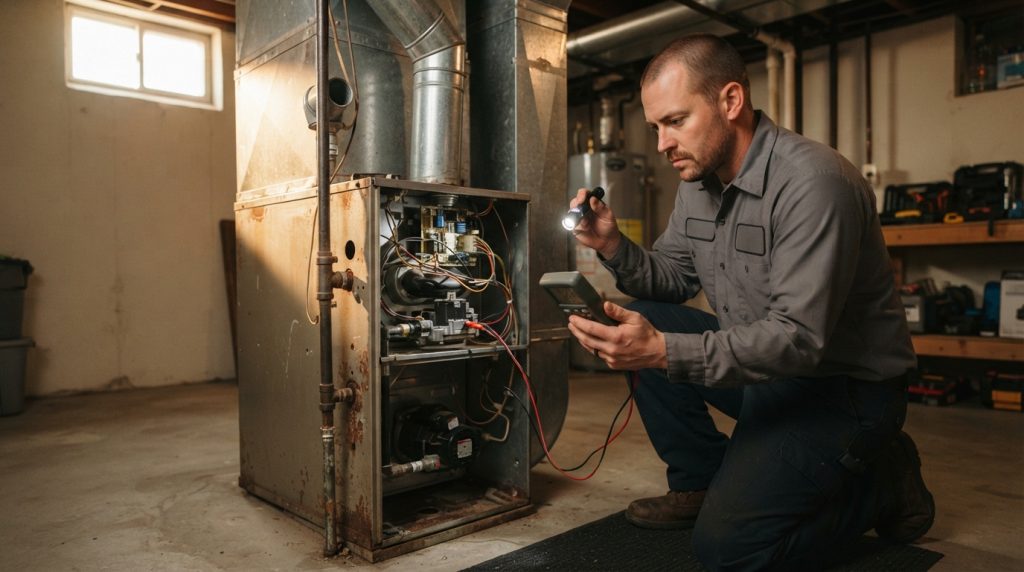
• Soot or rust near the unit : Visible soot, rust, or corrosion around the furnace cabinet suggests ventilation or combustion problems.
Any of these signs, especially when combined with a rising energy bill, usually means the system is working harder than it should to maintain comfort.
Safety Risks That Require Same-Day Service
Some heating problems go beyond comfort and efficiency and become safety hazards. Carbon monoxide exposure is the most serious risk tied to malfunctioning fuel-burning furnaces.
Federal guidance is direct about the stakes involved. The Consumer Product Safety Commission notes that CPSC urges consumers to schedule a yearly professional inspection of all fuel-burning home heating systems, including furnaces, boilers, fireplaces, wood stoves, water heaters, chimneys, flues and vents, since heating equipment is among the top contributors to CO deaths. The Environmental Protection Agency adds that fuel-burning appliances, including oil and gas furnaces, should be inspected by a trained professional at the beginning of every heating season, which can be confirmed through EPA indoor air quality guidance.
A working carbon monoxide alarm is not a substitute for proper maintenance, but it does provide an added layer of protection between inspections. Homes in Grandville, MI with older furnaces or aging ductwork face a higher likelihood of combustion-related wear as heating systems approach the end of their typical service life.
Comparing Routine Maintenance to Emergency Repair Needs
Understanding the difference between scheduled upkeep and urgent repair helps homeowners prioritize when to call for service.
| Situation | Typical Cause | Recommended Response |
| Annual tune-up | Normal wear, dust buildup | Scheduled seasonal maintenance |
| Uneven heating or weak airflow | Dirty filter, duct blockage | Inspection within a few days |
| Burning smell or strange noise | Mechanical or electrical fault | Prompt professional diagnosis |
| Yellow flame, soot, or CO alarm trigger | Combustion or ventilation failure | Immediate service, same day |
This kind of comparison helps homeowners decide whether a symptom can wait for a regular appointment or needs faster attention.
Based in USA, Redmon Heating & Cooling serves customers across Grandville, MI, with services that include furnace repair, heating system installation, and seasonal maintenance.
How often should a residential furnace be inspected? Most manufacturers and safety organizations recommend one professional inspection per year, ideally before the start of the heating season, to check combustion components and safety controls.
Can a furnace run safely with a cracked heat exchanger? No. A cracked heat exchanger can allow combustion gases, including carbon monoxide, to mix with household air, which is why this issue typically requires the furnace to be shut down until repaired.
What does a short-cycling furnace usually mean? Short cycling often points to a clogged filter, a malfunctioning thermostat, or an oversized unit, all of which reduce efficiency and increase wear on internal components.
Is a yellow pilot light always dangerous? A yellow or flickering flame instead of a steady blue one suggests incomplete combustion and should be checked promptly, since it can be linked to carbon monoxide production.
Recognizing early warning signs and understanding when a symptom crosses into safety-hazard territory helps homeowners make informed decisions about heating system care throughout the colder months. Current availability details for Redmon Heating & Cooling are published for the local service area.