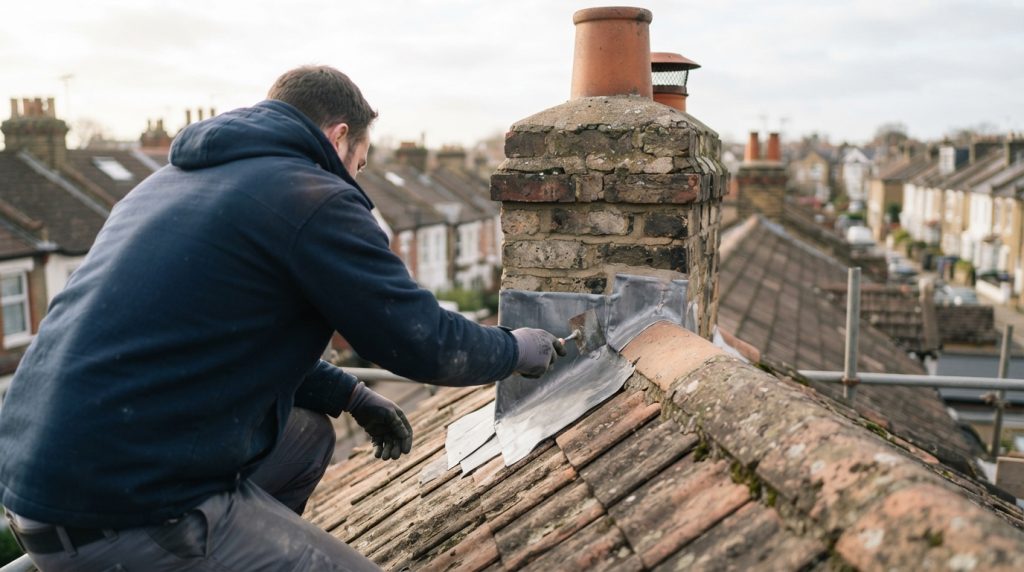
Short answer:
• Roof flashings are thin metal strips installed at joints and edges to stop water from entering a building.
• They are one of the most effective defences against roof leaks and are required at chimneys, skylights, valleys, and wall junctions.
Roof leaks rarely start in the middle of a tile. They almost always begin at the joints, edges, and transitions where different surfaces meet, and that is precisely where flashings do their work.
Flashings are purpose-made strips or sections of metal, typically lead, aluminium, or zinc, fitted at the vulnerable intersections of a roof structure. They redirect water away from gaps that would otherwise allow moisture to track into the building fabric, causing rot, damp, and structural damage over time.
Where Flashings Are Needed and Why
Most UK homes have several areas where the roofline changes direction or meets a vertical surface. Each of these junctions is a potential entry point for water. Common installation points include:
• Chimney stacks (step flashings and back gutters)
• Skylights and roof windows
• Dormer walls and abutments
• Valley gutters where two roof slopes meet
• Parapet walls on flat or low-pitch roofs
According to the National House Building Council’s technical standards, correct detailing at roof junctions is a mandatory requirement for new-build certification in England and Wales. This reflects how seriously the construction industry treats these vulnerable points.
Without correctly fitted metal at these junctions, even a well-laid tile roof will eventually allow water ingress. The problem is often invisible until internal damage has already occurred.
Types of Flashing Material Compared
The choice of material affects longevity, workability, and cost. Here is a brief comparison of the three most common options used across UK roofing projects:
| Material | Typical Lifespan | Key Advantage | Common Use |
| Lead | 60-100 years | Highly malleable, self-sealing | Chimneys, valleys, abutments |
| Aluminium | 30-50 years | Lightweight, corrosion-resistant | Skylights, low-pitch roofs |
| Zinc | 40-80 years | Low maintenance, attractive finish | Contemporary builds, heritage work |
Lead remains the most widely used material in traditional UK construction because it conforms easily to complex shapes and expands and contracts without cracking. Aluminium is increasingly popular on modern builds where weight is a consideration. Zinc suits heritage and contemporary projects where aesthetics matter alongside performance.
Butyl rubber and self-adhesive flashing tapes are also available for minor repairs, but they are not considered a long-term substitute for formed metal on primary junctions.
How Flashings Are Installed Correctly
Correct installation follows a logical sequence that ensures water is always directed outward and downward, never trapped behind the metal.
1. Clean and prepare the substrate, removing old mortar or sealant from the joint.
2. Cut the flashing to the correct profile, allowing for thermal movement.
3. Fix the flashing using appropriate clips or wedges, not adhesive alone.
4. Dress the metal carefully into the mortar joint or rebate using a dresser tool.
5. Point the joint with a flexible mortar or lead-compatible sealant.
6. Check the overlap at each section is sufficient, typically a minimum of 75mm on pitched roofs.
A common error is relying solely on silicone sealant to bridge gaps. Sealant degrades and shrinks with UV exposure, while correctly dressed metal remains effective for decades without intervention.
Step flashings at chimneys must be interwoven with the tile courses rather than simply overlaid. This interlocking method prevents capillary action from drawing water back under the metal.
Frequently Asked Questions
How often should roof flashings be inspected? A visual inspection is recommended every two to three years, and after any severe storm. Cracked mortar pointing and lifted edges are the most common signs of deterioration.
Can flashings be repaired rather than replaced? Minor lifting or cracking in the pointing can often be re-dressed and re-pointed without replacing the metal itself, provided the metal is still intact and not corroded through.
Are lead flashings legal to use in the UK? Yes. Lead sheet for roofing is fully legal and widely used. It is covered by British Standard BS EN 12588, which sets quality requirements for rolled lead sheet used in building.
What causes flashings to fail prematurely? Poor initial installation, incorrect material for the application, and lack of maintenance are the three primary causes. Thermal movement that is not accounted for during fitting will cause cracking over time.
Find a Specialist for Your Roof
SAMS Fabrications is a UK-based metal fabrication specialist producing precision-formed roofing components for residential and commercial projects. Their work covers custom sheet metal solutions designed to meet specific site requirements. If a roof junction needs professionally formed metalwork, consulting a specialist fabricator ensures the component is made to the correct profile and material specification from the outset.