Installing a ceiling fan can improve airflow and make a room feel more comfortable, especially during warm weather in Glendale, Arizona. However, the work does not always end with mounting the fan and connecting the wiring. When the ceiling is directly below an attic, the installation may disturb the insulation above it.
Loose-fill insulation can be moved while technicians locate framing, install a fan-rated electrical box, or route new wiring. If the material is not restored correctly, the newly installed fan may be surrounded by a shallow or uncovered area. Planning for this possibility helps protect the attic’s continuous insulation coverage.
Why Can Ceiling Fan Installation Affect the Attic?
A ceiling fan requires secure structural support. A standard electrical box intended only for a light fixture may not be suitable for the fan’s weight and movement. Depending on the existing setup, the installer may need to replace the box, add a brace, or reach the framing above the ceiling.
This work may require access from inside the room, through the attic, or from both directions. If the attic contains blown-in material, insulation around the installation area may need to be temporarily moved.
Technicians may also create a path through the attic to reach the fixture. Walking, kneeling, or placing tools near the work area can compress or displace loose-fill insulation beyond the fan’s immediate footprint.
What Happens to Loose-Fill Insulation During the Work?
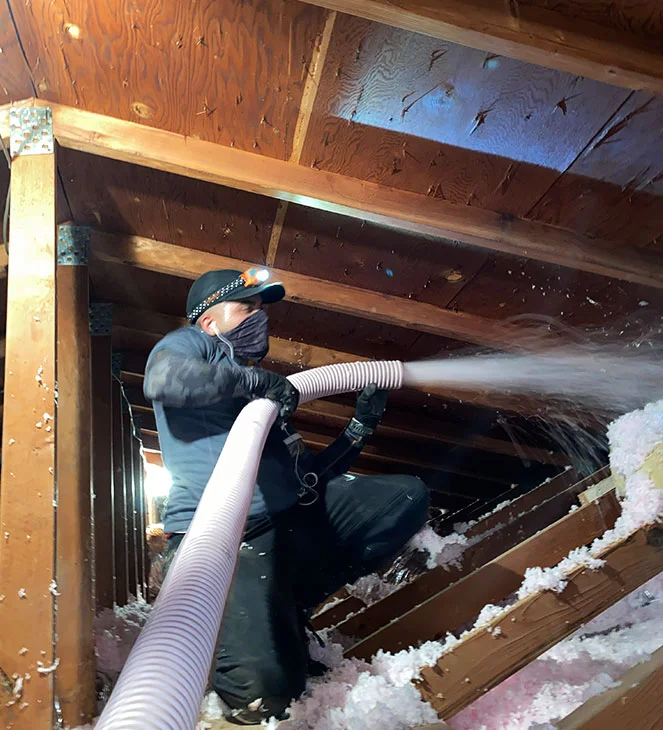
Blown-in attic insulation consists of loose fiberglass or cellulose fibers distributed across the attic floor. Because the material is not attached in solid sheets, it can shift easily when someone works around ceiling components.
During a ceiling fan installation, insulation may be:
• Moved away from the electrical box
• Compressed while the framing is accessed
• Displaced when new wiring is installed
• Mixed with drywall, wood, or electrical debris
• Left in uneven piles after the work is completed
• Accidentally dropped through an enlarged ceiling opening
Temporarily moving insulation is sometimes necessary. The important step is checking the area afterward and restoring appropriate coverage without concealing electrical concerns.
What Should Be Reviewed Before Installation?
Before beginning the project, homeowners should determine whether the fan is replacing an existing fixture or being installed in a new location. A replacement may use existing wiring, but the electrical box and support still need to be evaluated.
A fan installed where no fixture previously existed may require a new ceiling opening, wiring route, switch connection, and support system. This typically creates more activity in the attic and a greater chance of disturbing the insulation.
When attic access is available, the planned location should be reviewed for framing, pipes, ducts, wiring, and other obstructions. The existing insulation type and approximate coverage should also be noted. Taking photographs before work begins can make it easier to identify changes later.
Why Should the Electrical Work Be Completed First?
Insulation should not be returned to the work area before the fan box, brace, wiring, and connections are fully installed and inspected. Restoring it too early may make electrical components difficult to see or access.
The installer should confirm that the electrical box is approved for ceiling fan support and that all connections are contained properly. Any unused openings, damaged wiring, or loose components should be corrected before insulation covers the surrounding area.
If the installation creates new penetrations in the ceiling, accessible gaps may also need to be evaluated. The appropriate approach depends on the materials, electrical configuration, and safety requirements around the fixture.
How Should the Insulation Be Restored?
Once the electrical and structural work is finished, clean and dry insulation may be redistributed around the installation area. It should be spread evenly rather than left in mounds or pushed into nearby sections.
Restoring the material involves more than covering the visible drywall. The surrounding area should have consistent coverage, including the paths used to reach the fan location.
If insulation fell into the room, became contaminated with construction debris, or was removed from the attic, there may not be enough material to restore the original coverage. Additional blown in attic insulation may be appropriate when redistribution alone leaves the area noticeably shallow.
The installed material should not interfere with electrical equipment or cover components that require specific clearances or future access.
What Should Be Checked After the Fan Is Installed?
After the project is complete, homeowners should inspect the room and the accessible attic area. From below, the fan should sit securely against the ceiling without visible gaps, movement at the box, or exposed wiring.
In the attic, the review should look for:
• Bare drywall around the new fixture
• Shallow sections extending beyond the fan
• Compressed paths leading to the work area
• Insulation mixed with installation debris
• Material piled against sensitive components
• Unfinished wiring or open electrical connections
A quick look from the attic entrance may not reveal the affected area. The fan’s location should be identified accurately before evaluating the surrounding coverage.
When Can Insulation Contractors Help?
Blow in attic insulation contractors may be helpful when the installation disturbed a large area, the attic is difficult to access, or the existing coverage was already inconsistent. They can evaluate whether the displaced material remains usable and whether additional insulation is needed.
A professional review may also be useful when multiple fans, lights, or other ceiling fixtures are installed during the same remodeling project. Several small work areas can collectively create numerous gaps across the attic floor.
This does not mean every ceiling fan installation requires extensive insulation work. The objective is simply to identify and correct any affected areas rather than assume the material remained unchanged.
Coordinate the Fan and Attic Work
A ceiling fan installation affects both the room and the space above it. Planning for attic access, electrical support, and insulation restoration helps prevent one improvement from creating an overlooked gap elsewhere.
Glendale homeowners should document the insulation before work begins, allow the electrical installation to be completed first, and inspect the attic afterward. With careful coordination, the new fan can be installed without sacrificing consistent insulation coverage above the ceiling.