In short:
- Tile and grout need different cleaning approaches than carpet because grout is porous and absorbs moisture, dirt, and soap residue.
- Routine sweeping, pH-neutral cleaners, and proper drying prevent most grout discoloration before it becomes a deep stain.
- Humid climates like Venice, FL create faster regrowth conditions for mold and mildew on bathroom and floor grout.
Tile cleaning refers to the process of removing dirt, soap residue, and mildew from ceramic, porcelain, or natural stone surfaces, along with the grout lines between them, using methods suited to each material’s porosity. Grout lines absorb moisture and grime differently than the tile itself, which is why a single all-purpose cleaner rarely restores both evenly.
Homeowners searching for tile cleaning are usually dealing with one of two problems: grout that has darkened despite regular mopping, or tile that looks dull even after a surface wipe-down. Both issues trace back to how porous the grout is and how much moisture has been trapped in it over time.
Why Grout Gets Dirty Faster Than Tile
Cement-based grout is not sealed the way glazed tile is, so it absorbs spills, cleaning residue, and ambient moisture at a different rate. This difference explains why floors can look streaky or patchy even when the tile itself appears clean.
Three conditions typically drive grout discoloration:
- Leftover cleaner or dirty rinse water drying into the grout pores instead of being fully rinsed away
- Grout that stays damp longer than the surrounding tile, making it look darker until it dries
- An underlying moisture problem in the room, such as poor bathroom ventilation or a slow leak
Federal guidance on indoor moisture control is relevant here. The EPA recommends keeping indoor humidity below 60 percent, and ideally between 30 and 50 percent, to limit mold growth on porous building materials, a standard documented in the EPA mold guidance resources for homeowners. In a Florida bathroom or lanai, where ambient humidity runs higher for much of the year, grout lines can redarken within weeks of a thorough cleaning if ventilation is not addressed alongside the cleaning itself.
Matching the Cleaning Method to the Surface
Not every tile surface tolerates the same products or tools. Natural stone, glazed ceramic, and unsealed grout each respond differently to acidic or abrasive cleaners.
| Surface Type | Recommended Approach | What to Avoid |
|---|---|---|
| Glazed ceramic/porcelain | pH-neutral cleaner, soft brush | Abrasive scouring pads |
| Cement grout (unsealed) | Mild detergent, rinse, full air dry | Vinegar or acidic cleaners |
| Natural stone tile | Stone-safe neutral cleaner | Bleach or ammonia-based products |
| Sealed grout | Routine wipe-down, spot cleaning | Harsh scrubbing that strips sealer |
Bleach is often assumed to be a safe default for grout, but it can lighten colored grout unevenly and is not recommended by the EPA as a routine step in mold cleanup. Acidic cleaners, including vinegar, are also discouraged on cement grout because they can break down the material over repeated use.
When Routine Cleaning Is Not Enough
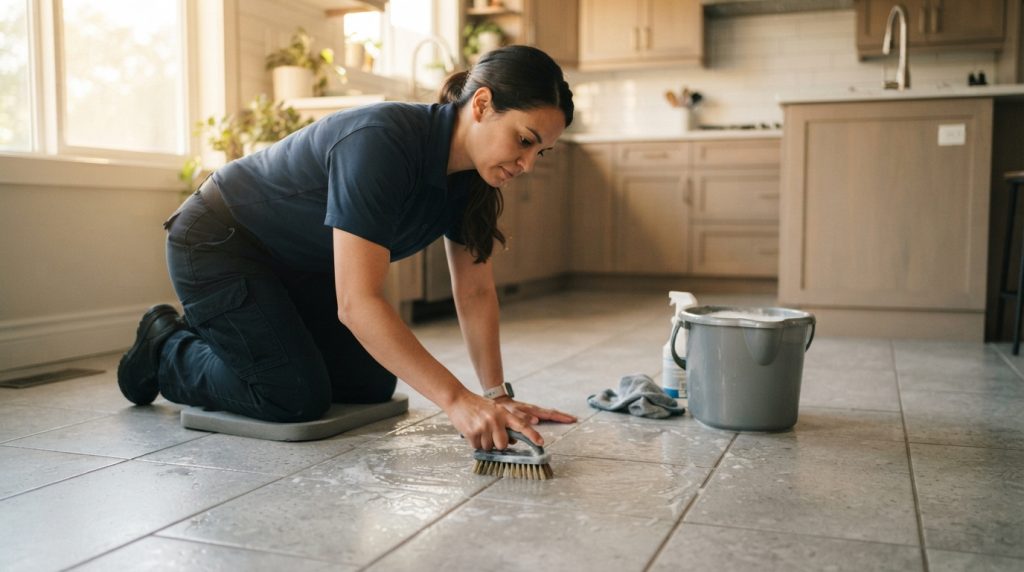
Light surface soil usually responds to regular sweeping, a neutral cleaner, and a stiff brush on grout lines. Some situations call for deeper intervention than a weekly mop and spray routine.
Signs that a surface needs more than basic maintenance include:
- Grout that darkens again within two to four weeks of a thorough cleaning
- Visible mold or mildew covering an area larger than roughly 10 square feet, the threshold at which EPA guidance points toward professional remediation support
- Staining that remains after scrubbing, suggesting the discoloration sits inside the grout body rather than on the surface
- Tile that stays damp or shows signs of moisture intrusion from behind the surface
Based in Punta Gorda, FL, Superior Carpet & Upholstery Cleaning Inc works with residential customers whose homes are served across Venice, FL, where coastal humidity and seasonal rain make grout maintenance an ongoing concern rather than a one-time task. The business’s services, as described on its Google Business Profile, include cleaning and sealing of carpet, upholstery, area rugs, and tile and grout surfaces.
Frequently Asked Questions
How often should tile and grout be professionally cleaned? This depends on foot traffic, humidity, and whether the grout is sealed, though homes in consistently humid areas often need more frequent attention to grout lines than drier climates.
Can sealing grout stop discoloration permanently? Sealing reduces how much moisture and soil the grout absorbs, but it does not make grout stain-proof, and reapplication is typically needed on a recurring schedule.
Is bleach safe for cleaning grout? The EPA does not recommend bleach as a routine step for grout or mold cleanup since it can discolor grout unevenly without addressing the underlying moisture source.
What causes tile floors to look dull after mopping? Dull tile often results from cleaner residue left behind during mopping rather than dirt itself, which a pH-neutral rinse and full drying cycle typically resolves.
Final Notes and Next Steps
Grout and tile respond best to cleaning methods matched to their material and to consistent moisture control rather than one aggressive treatment. Current service area information for Superior Carpet & Upholstery Cleaning Inc is available for homes with tile and grout maintenance needs.