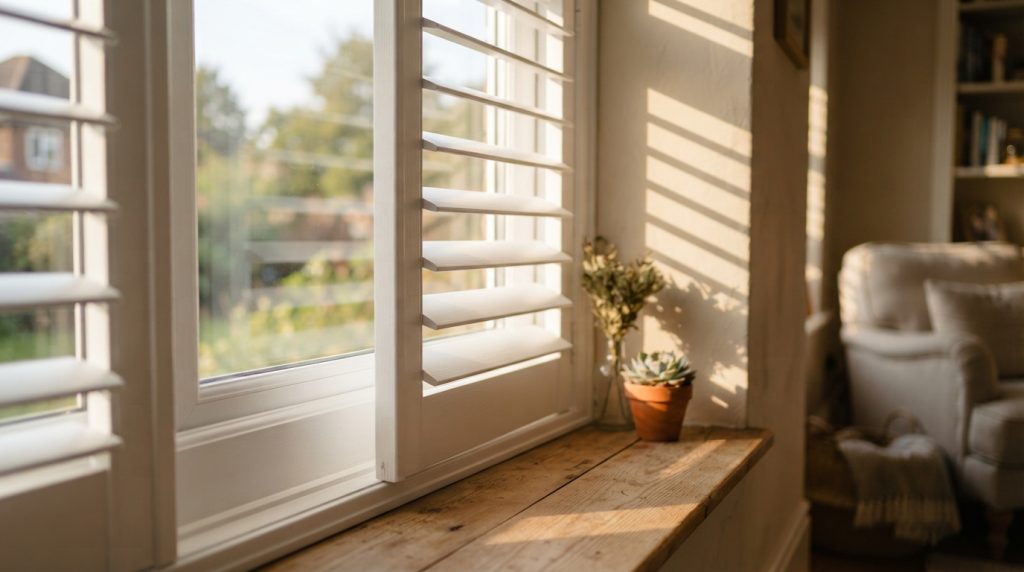
Briefly:
• Interior plantation shutters remain one of the most durable window covering options for Florida homes, offering light control and insulation.
• Hillsborough County sits in a Wind-Borne Debris Region, so homeowners near Tampa, FL should understand the difference between decorative shutters and code-approved storm protection.
• Material, mount type, and local climate all affect how shutters perform and how long they last.
Picking window Shutters Tampa FL comes down to matching material and mount style to the room’s humidity level, light needs, and whether the window also requires storm protection. For homes in Tampa, FL, that decision carries extra weight because of the region’s heat, humidity, and hurricane exposure. Shutters that look right in a catalog photo do not always hold up once installed on a south-facing window that gets direct sun for most of the day.
Interior plantation shutters are built from wood, faux wood, or composite materials, each with different tolerances for moisture and temperature swings. Faux wood versions resist warping better in humid climates, which makes them a common choice for bathrooms, kitchens, and rooms with heavy air conditioning cycling. Wood shutters offer a different visual texture and can be painted or stained, but they are more sensitive to swelling in consistently damp conditions.
Choosing the Right Shutter Style and Material
Shutter selection generally comes down to three factors: louver size, frame style, and material. Wider louvers let in more light and are easier to clean, while narrower louvers give a more traditional look but collect more dust along the slats.
• Louver size: 2.5 inch louvers suit smaller windows; 3.5 to 4.5 inch louvers work better on larger openings and modern interiors.
• Frame style: L-frame mounts sit inside the window opening, while Z-frame and flush frames overlap the trim for a more finished look.
• Material: faux wood and composite resist humidity; natural wood offers a premium finish but needs more climate control.
| Material | Moisture Resistance | Typical Use | Maintenance |
| Faux wood/composite | High | Bathrooms, kitchens, humid rooms | Low, wipe clean |
| Natural wood | Moderate | Living rooms, bedrooms | Moderate, avoid direct moisture |
| Vinyl/PVC | High | High-humidity or coastal rooms | Low |
Interior Shutters Versus Storm Protection
Interior plantation shutters and exterior hurricane shutters serve different purposes, and confusing the two can create a false sense of protection. Plantation shutters control light and privacy inside a room; they are not rated for wind-borne debris and do not satisfy building code opening-protection requirements. Hillsborough County falls inside a Wind-Borne Debris Region, which means impact-rated glazing or approved shutter protection is required for new construction and most window replacements in the Tampa Bay area.
Homeowners who want storm-rated coverage need products tested separately from decorative interior shutters. According to the Florida Building Code wind-borne debris provisions, windows must be impact-resistant or protected, with approved labels identifying the manufacturer, performance characteristics, and approved product certification agency. Any exterior shutter marketed as hurricane protection should carry a Florida Product Approval or Miami-Dade Notice of Acceptance number before installation.
Installation Considerations for Humid, Storm-Prone Climates
Measuring accuracy matters more in Florida than in drier climates because humidity swings can cause even small gaps to shift over a season. A few practical points reduce callbacks and long-term issues:
1. Confirm whether the window opening is square before ordering, since older Tampa, FL homes often have slight frame settling.
2. Choose hinges and mounting hardware rated for high-humidity environments to prevent corrosion.
3. Allow a small clearance gap on faux wood and composite panels so they do not bind during temperature and humidity shifts.
4. Verify any exterior storm shutter installation against current wind-borne debris region rules before assuming it meets code.
Professional measurement and installation reduce the chance of panels binding, sagging, or failing to close evenly after the first humid season.
Frequently Asked Questions
Do all homes in Tampa, FL need hurricane shutters? Only if the home lacks impact-rated glazing and sits inside the Wind-Borne Debris Region; code-approved shutters such as accordion, roll-down, Bahama, colonial, or panel systems satisfy the requirement, and homeowners do not need both shutters and impact windows on the same opening.
What is the difference between plantation shutters and hurricane shutters? Plantation shutters are interior window coverings designed for light control and privacy, while hurricane shutters are exterior, code-rated systems designed to resist wind-borne debris.
How long do interior shutters typically last in humid climates? Faux wood and composite shutters tend to outlast natural wood in humid rooms since they resist warping, though exact lifespan depends on installation quality and daily sun exposure.
Can temporary materials like plywood meet Florida’s shutter code? No. Temporary materials such as plywood can be used during emergencies but do not satisfy code requirements for permanent protection.
Local Service Area
Based in USA, Budget Blinds of Central Tampa serves customers across Tampa, FL.
A published overview of Learn More about Shutters is available for homeowners comparing material and installation options in the area.