In short:
- Concrete cutting covers slab/flat sawing, wall sawing, core drilling, and egress window cutting for structural and utility work.
- Dust control and planning matter: federal rules require wet cutting or vacuum extraction on handheld saws to limit silica exposure.
- Readers in Cranbury, NJ can expect project scope, access, and utility checks to shape timeline and cost before cutting begins.
Concrete cutting is the controlled removal or separation of hardened concrete using diamond-tipped saws, core drills, or wall saws to create openings, trenches, or clean edges without damaging the surrounding structure. Anyone planning a renovation, utility installation, or demolition step that involves concrete needs to understand the method, the safety rules, and the site prep involved before work starts.
Concrete cutting is not a single technique. It spans several specialized processes, each suited to a different material thickness, location, or finished result. Homeowners and contractors in Cranbury, NJ who search for this service are usually trying to solve one of three problems: adding an opening, removing a slab section, or accessing utilities buried in concrete.
Common Concrete Cutting Methods
Different jobs call for different equipment. Matching the method to the task affects both cost and finish quality.
- Flat/slab sawing – Used for cutting floors, driveways, or pavement, typically for trenching or full slab removal.
- Wall sawing – Creates precise openings in vertical concrete walls for doors, windows, or mechanical penetrations.
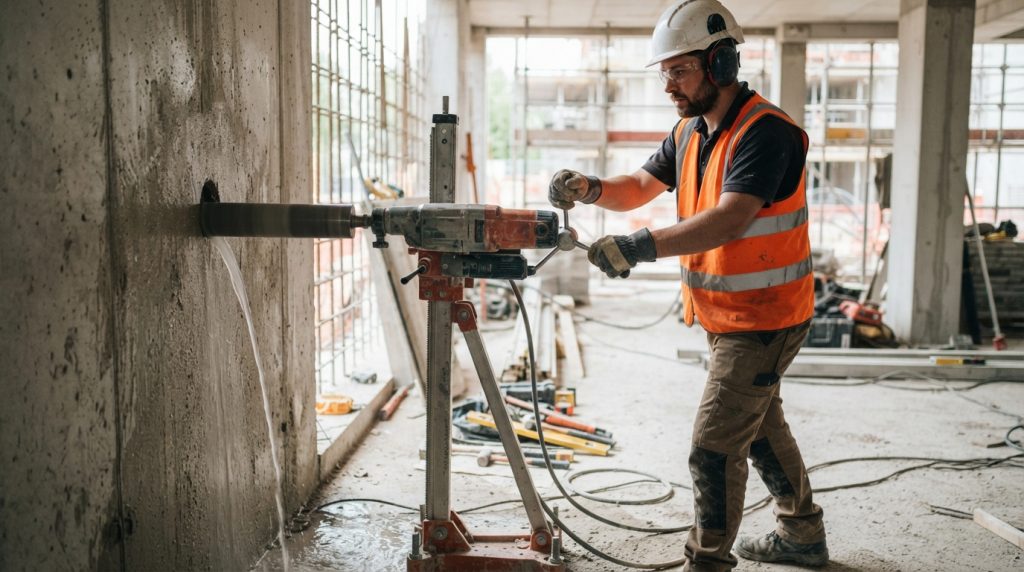
- Core drilling – Produces round holes through concrete or masonry for plumbing, electrical conduit, or HVAC lines.
- Egress window cutting – Cuts foundation openings to code-compliant size for basement egress windows.
Each method requires different blade types, water flow rates, and crew sizing, which is why an on-site assessment typically precedes a quote.
Safety and Dust Control Requirements
Cutting concrete generates fine crystalline silica dust, which is classified as a serious inhalation hazard on construction sites. Federal rules set clear limits on how much dust workers can be exposed to during cutting, grinding, or drilling tasks.
According to OSHA’s construction silica standard, applying water to a saw blade during cutting substantially reduces the dust generated by these operations. The agency’s exposure limit for respirable crystalline silica is set at 50 micrograms per cubic meter of air averaged over an eight-hour shift, and contractors are expected to use wet cutting methods or vacuum dust collection systems to stay under that threshold.
Property owners in Cranbury, NJ hiring a contractor for cutting work should confirm that crews use wet-cutting equipment or HEPA-rated vacuum extraction, since dry-cutting without controls can release dust well above safe limits. Indoor jobs, enclosed spaces, or large-volume cuts may also call for respiratory protection depending on the task and duration.
Planning Checklist Before Work Begins
A few practical steps reduce delays and unexpected costs once cutting starts.
- Confirm the slab or wall thickness and reinforcement type (rebar, post-tension cable, or plain concrete).
- Mark and clear the work area of furniture, equipment, or vehicles near the cut line.
- Verify utility locations below or within the slab before any drilling or sawing begins.
- Ask whether the job requires wet cutting, dry cutting with dust collection, or both.
- Confirm disposal plans for cut debris and slurry runoff.
| Method | Typical Use | Dust Control Approach |
|---|---|---|
| Flat/Slab Sawing | Floors, driveways, trenching | Wet cutting with water-fed blade |
| Wall Sawing | Door/window openings in walls | Wet cutting or shrouded vacuum |
| Core Drilling | Round holes for utility lines | Water-cooled bit or vacuum shroud |
| Egress Window Cutting | Foundation window openings | Wet cutting, controlled debris removal |
Frequently Asked Questions
Does concrete cutting always require water? Not always, but wet cutting is the most common dust control method for handheld and walk-behind saws, since it suppresses silica dust at the point of the cut.
Can concrete cutting damage nearby structural elements? Properly planned cuts account for reinforcement and load paths, which is why thickness and rebar location are typically checked before a saw or drill is used.
How long does a typical slab-cutting job take? Duration depends on slab thickness, reinforcement, and whether utilities need to be avoided, so timelines vary by site rather than following a fixed schedule.
Is a permit needed for cutting an egress window opening? Local building departments in New Jersey often require permits for foundation modifications like egress window cuts, so checking with the municipality before work begins is advisable.
Business Information and Next Steps
Based in Hainesport, NJ, AAA Affordable Drilling & Sawing serves customers across Cranbury, NJ for concrete cutting and related drilling and sawing work.
Additional project details are outlined on the page where Click Here To Visit AAA Affordable Drilling & Sawing covers service specifics for the surrounding area.