Summary first:
- Scrap metal recycling reduces energy use, landfill waste, and pollution compared to mining and processing virgin ore.
- Facilities that buy ferrous and non-ferrous metals, including copper, aluminum, brass, and steel, keep usable material in circulation rather than in landfills.
- Residents and businesses across Central Jersey, NJ can divert old appliances, wiring, and vehicle parts from waste streams through local scrap processors.
Scrap metal recycling is the process of collecting discarded metal items, sorting them by type, and reprocessing them into raw material for new manufacturing rather than sending them to a landfill. This practice reduces the energy and raw-material demand associated with mining and refining virgin ore.
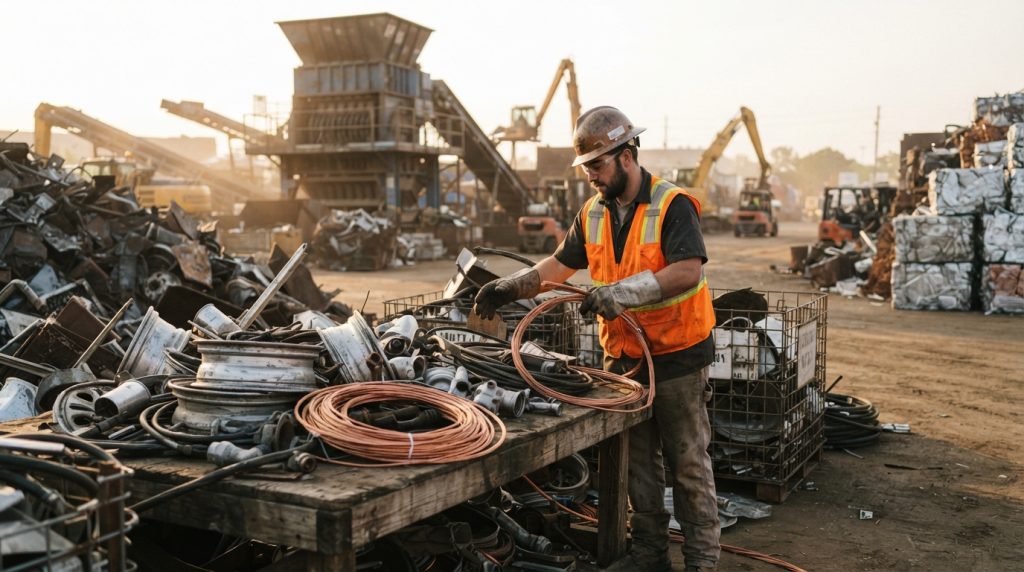
Households and contractors generate a steady stream of metal waste, from old appliances to construction offcuts and vehicle parts. Scrap metal recycling gives this material a second life by routing it back into steel mills, foundries, and manufacturing supply chains instead of a disposal site. Facilities that accept ferrous and non-ferrous metals typically sort materials such as copper, aluminum, brass, iron, and stainless steel for resale to processors and mills.
Environmental Value of Recycling Metal
Metal recycling reduces the environmental footprint of manufacturing in measurable ways. Producing metal from recycled scrap bypasses the most energy-intensive stages of ore extraction and refining.
- Recycling aluminum consumes roughly 95 percent less energy than producing it from raw bauxite ore, according to the EPA’s sustainable materials management data.
- Metals account for a significant share of landfill volume by weight, so diverting them extends landfill capacity and reduces soil contamination risk.
- Processing recycled metal cuts air and water pollution compared to primary metal production, lowering the burden on nearby communities.
For residents of Central Jersey, NJ, these effects are tied directly to local waste management. Diverting scrap metal from curbside trash reduces the volume handled by municipal transfer stations and limits the environmental load of landfill expansion in the region.
What Materials Qualify as Scrap Metal
Not every metal item is accepted at every facility, so understanding common categories helps streamline the drop-off or pickup process.
- Ferrous metals – iron and steel items, including structural scrap and appliance frames.
- Non-ferrous metals – aluminum, copper, brass, and stainless steel, which typically carry higher resale value.
- Automotive components – alternators, starters, aluminum rims, and catalytic converters.
- Batteries and AC compressors – accepted at select facilities due to specialized handling requirements.
| Material Type | Common Examples | Typical Value Tier |
| Ferrous | Iron, steel appliances | Lower per-pound value |
| Non-ferrous | Copper, brass, aluminum | Higher per-pound value |
| Automotive | Alternators, starters, catalytic converters | Variable, often priced per piece |
| Specialty | Batteries, AC compressors | Handled separately due to hazardous content |
How Local Recycling Supports Regional Infrastructure
Metal recovery is not only an environmental matter. It also supports regional supply chains by returning usable material to manufacturers without the cost and delay of new ore extraction. For homeowners and small businesses in Central Jersey, NJ, this means old vehicles, renovation debris, and worn-out equipment can be processed locally rather than transported long distances or left in storage indefinitely.
A facility operating from Trenton, NJ typically serves as a collection and processing point where ferrous and non-ferrous scrap is weighed, sorted, and prepared for resale to mills. This localized handling reduces transportation emissions associated with moving scrap to distant processors and keeps more of the recycling value within the regional economy.
Frequently Asked Questions
What types of metal can be recycled through a scrap facility? Most facilities accept ferrous metals like iron and steel, along with non-ferrous metals such as copper, aluminum, brass, and stainless steel, plus automotive parts like alternators and catalytic converters.
Does recycling scrap metal actually reduce pollution? Yes. Processing recycled metal requires less energy and generates less air and water pollution than extracting and refining virgin ore, based on EPA sustainability data.
Can junk vehicles be processed through metal recycling facilities? Many scrap processors accept junk cars regardless of condition, recovering metal components and fluids for proper disposal or resale.
Is there a cost to drop off scrap metal? Policies vary by facility and material type; checking directly with a specific processor is the most reliable way to confirm current terms.
Local Service Information
Based in Trenton, NJ, Alpha Shredding Group, Inc serves customers across Central Jersey, NJ who need a destination for ferrous and non-ferrous scrap metal. The business is identified in public directory and mapping records at its Trenton, NJ address.
Additional operational details, including hours and accepted materials, are published through Visit Website for reference by residents and businesses in the surrounding area.
