The gist:
- Lint buildup inside dryer exhaust ducts is a leading cause of preventable fires in commercial laundry operations, making routine clearing a safety and compliance issue, not just a maintenance task.
- NFPA 211 calls for annual inspection of dryer exhaust systems and cleaning whenever lint accumulation requires it, a standard many states and insurers reference directly.
- Properties in Coral Springs, FL with high dryer volume, including multifamily buildings, hotels, and laundromats, face elevated risk from humidity and heavy seasonal usage.
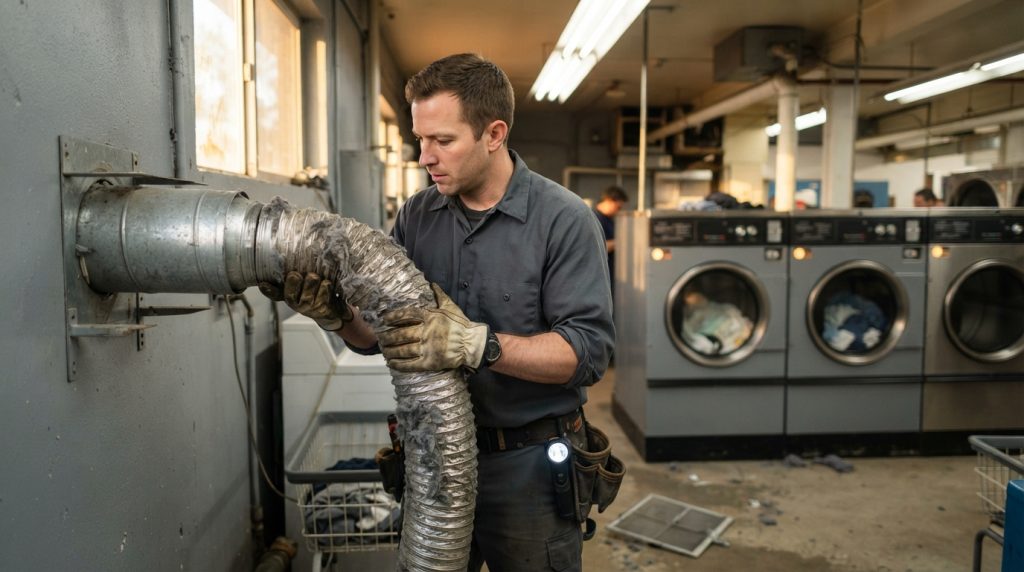
Commercial laundry rooms, hotels, and multifamily properties rely on dryers running for hours at a time, and the ducts that vent that hot, moist air collect lint far faster than most owners expect. Commercial Dryer Duct Cleaning addresses that buildup directly, removing lint and debris from exhaust runs so air can exit the building efficiently and safely. For properties in Coral Springs, FL, where laundry facilities often run daily across dozens of units, this task carries both a fire-safety and an operational-cost dimension.
Lint is highly combustible, and when it accumulates inside a duct, it restricts airflow and traps heat near the dryer’s heating element. Industry data compiled from federal fire incident records shows that a measurable share of dryer fires nationally trace back to insufficient cleaning rather than mechanical failure, underscoring why routine duct maintenance belongs in every facility’s maintenance schedule.
Why Lint Buildup Becomes a Fire Risk
A clogged dryer duct does more than slow drying times. It creates conditions where heat cannot escape, raising the temperature inside the vent run until lint ignites.
- Lint accumulates fastest in long or bent duct runs common in multi-unit buildings.
- Restricted airflow forces dryers to work harder, increasing wear on heating components.
- Moist lint in humid climates like South Florida can compact and adhere to duct walls, making it harder to clear with simple vacuuming.
Federal fire data gathered through the U.S. Fire Administration’s reporting system tracks clothes dryer and washing machine fires as a distinct category, and failure to clean remains one of the most frequently cited contributing factors in these incidents. For commercial properties running multiple dryers daily, the cumulative lint load is substantially higher than in a single household, which shortens the safe interval between cleanings.
What NFPA 211 Requires for Commercial Properties
The National Fire Protection Association’s NFPA 211 standard governs chimneys, vents, and dryer exhaust systems, including those in commercial settings. The standard’s core requirement is straightforward.
| Requirement | Detail |
| Inspection frequency | At least once annually |
| Cleaning trigger | When lint accumulation is present, not on a fixed calendar alone |
| Applicable settings | Residential and commercial dryer exhaust systems |
| Adoption | Referenced by Florida’s fire code through NFPA 1 |
Florida is among the states that adopt NFPA 1 as its fire code, which incorporates NFPA 211 by direct reference. That means the annual inspection expectation is not just an industry best practice in Florida; it is tied to the state’s enforceable fire code framework. Property managers and business owners in Coral Springs, FL who document inspection and cleaning dates maintain a clearer compliance record if a fire marshal or insurer requests proof of maintenance.
Signs a Commercial Dryer Duct Needs Attention
Facility staff do not need specialized equipment to notice early warning signs between professional service visits.
- Clothes take noticeably longer to dry than they did a few months earlier.
- The dryer or surrounding wall feels hot to the touch during operation.
- A burning or musty smell lingers near the laundry area after cycles finish.
- Visible lint collects around the exterior vent hood or fails to flap freely in the wind.
- Energy bills tied to laundry operations climb without a clear explanation.
Any of these signs warrants a closer look at the exhaust run rather than waiting for the next scheduled service date.
Frequently Asked Questions
How often should a commercial dryer duct be cleaned? NFPA 211 calls for inspection at least annually, with cleaning performed whenever lint accumulation warrants it, which for high-volume commercial laundry operations can mean more frequent service than a single annual visit.
Does Florida law require dryer vent cleaning for commercial buildings? Florida adopts NFPA 1 as its fire code, which incorporates NFPA 211 by reference, so the annual inspection standard applies to commercial dryer exhaust systems operating in the state.
What is the difference between cleaning the lint trap and cleaning the duct? The lint trap only catches a portion of the lint generated during drying; the remainder travels into the duct itself, where it can accumulate unseen until airflow is noticeably restricted.
Can a dirty dryer duct affect energy costs? Yes. Restricted airflow forces the dryer to run longer and work harder to dry the same load, which increases energy use tied directly to the blockage.
Service Area Note
Dusty’s Air Duct Cleaning is based in Pompano Beach, FL and serves customers across Coral Springs, FL and nearby communities. The business, Dusty’s Air Duct Cleaning, is identified on its Google Business Profile with a physical address in Pompano Beach, FL.
Property details and local service area information for Coral Springs, FL are published through Explore Duct Cleaning Options, which covers the general vent cleaning service area.

