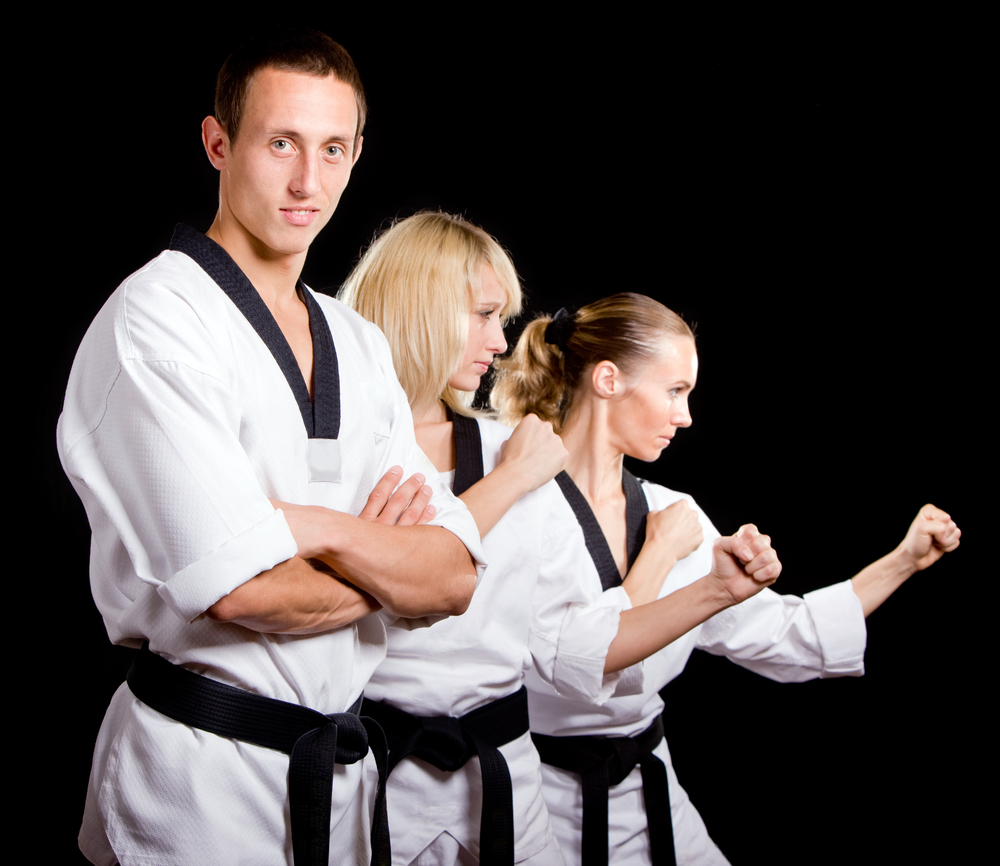
Beginner youth karate training focuses on learning foundational movements, class routines, and basic terminology. At the intermediate level, students are expected to connect those fundamentals into longer combinations, more detailed forms, and increasingly independent practice.
The change is gradual rather than immediate. Students continue practicing the same core skills, but instructors begin expecting greater accuracy, control, memory, and understanding.
What Do Students Learn During Beginner Youth Karate?
Beginner training introduces students to the structure of a martial arts class. They learn how to follow instructions, move safely within the training space, and perform basic techniques at a controlled pace.
Early lessons may include ready positions, foundational stances, blocks, strikes, kicks, and simple combinations. Students also begin learning how to shift their weight, maintain balance, and return to a stable position after each movement.
At this stage, instructors usually focus on one major correction at a time. A student may first learn where to place their feet before being asked to refine posture, hand position, or timing.
Repetition is important because many movements are unfamiliar. Even a simple stance may require a child to remember foot placement, knee position, body direction, and where to hold their hands.
Structured martial arts for beginners can help students build these skills in a sequence that becomes more detailed as they gain experience.
How Does Intermediate Training Build on the Basics?
Intermediate students do not stop practicing beginner techniques. Instead, they use those techniques as the foundation for more involved material.
A basic block may become part of a longer defensive combination. A single kick may be connected to footwork, a turn, or another technique. Stances may need to remain stable while the student changes direction or moves through a form.
The main difference is that students begin managing several details at once. They must remember the order of the movements while maintaining balance, control, and correct positioning.
This does not mean intermediate students perform every technique perfectly. It means they are developing the ability to notice errors, apply feedback, and make corrections with less prompting.
How Do Forms Become More Detailed?
Forms are planned sequences of martial arts movements performed in a specific order. Beginner forms are often introduced one section at a time so students can focus on the direction, stance, and technique required for each part.
As students move into intermediate youth karate, forms may become longer or include more detailed transitions. Students may need to remember additional direction changes, maintain consistent stances, and connect one section to the next without long pauses.
Instructors may also begin refining details that were not the main focus at the beginner level. These can include posture, rhythm, hand position, breathing, and the way weight shifts during a turn.
Memorizing the order remains important, but intermediate practice involves more than reaching the final movement. Students begin working on how the complete sequence is performed.
Do Intermediate Students Practice More Independently?
Intermediate students are generally expected to take more responsibility for remembering their curriculum. They may be asked to begin a form without following an instructor step by step or to review a combination with fewer verbal reminders.
This independence develops gradually. Instructors still demonstrate new material, provide corrections, and help students when they are uncertain.
The difference is that students begin learning how to use feedback between repetitions. Rather than waiting for the instructor to repeat the same correction, they are encouraged to remember it and apply it during the next attempt.
Parents comparing karate classes for beginners should consider how a program supports this transition. Students need enough guidance to understand the material, along with opportunities to practice recalling it independently.
How Does Partner Practice Change?
Beginner partner drills usually follow a predictable structure. Students may practice distance, controlled movement, and a specific technique while their partner performs an assigned role.
At the intermediate level, the sequence may involve more steps. Students may need to adjust their position, manage timing, and connect a defensive movement to a controlled response.
Control remains essential. Increased experience does not mean students should use excessive speed or force. Intermediate practice should reinforce the ability to perform techniques accurately while protecting both training partners.
Partner drills also help students understand that movements may need to be adjusted based on distance and positioning. A technique practiced alone may feel different when another person is involved.
Do Expectations Change During Karate Classes?
Class expectations often increase as students gain experience. Intermediate students may be expected to prepare more efficiently, remember established routines, and begin practice without repeated reminders.
Technical expectations also become more detailed. At the beginner level, completing the correct movement may be the primary goal. At the intermediate level, instructors may look more closely at stance stability, alignment, timing, and transitions.
Students may also be asked to maintain the quality of earlier material while learning new skills. Rank progression does not replace previous lessons. Each level adds to the curriculum the student has already learned.
This cumulative structure is common in organized martial arts programs because advanced material depends on dependable fundamentals.
How Quickly Do Students Reach the Intermediate Level?
There is no single timeline that applies to every child. Progress can depend on attendance, age, coordination, memory, practice habits, and how consistently the student responds to instruction.
Some students learn movement sequences quickly but need more time to improve stability and control. Others demonstrate careful technique but require additional repetition to remember longer combinations.
Families searching for youth karate near me should be cautious about focusing only on how quickly belts are awarded. A useful progression system should reflect whether the student understands the current material and is prepared for the expectations of the next level.
Moving forward before foundational skills are dependable can make later training more difficult.
What Should Parents Expect During the Transition?
Parents may notice that intermediate material requires more concentration and review. A student who appeared comfortable with beginner lessons may occasionally hesitate when forms become longer or combinations include more steps.
This is a normal part of learning. The student is being asked to organize more information while maintaining the technical skills developed at the beginner level.
Parents can support the process by encouraging consistent attendance and short, focused practice. Asking a child to review one section of a form may be more productive than expecting a complete performance every time.
Technical corrections should remain with the instructor so the child receives consistent guidance.
How Can Families Evaluate Youth Karate Programs in Peoria?
Families in Peoria, AZ, can look for programs that explain how students progress from foundational instruction into more detailed training. Age-appropriate teaching, controlled practice, clear rank expectations, and regular instructor feedback are important at both levels.
A structured program should challenge students without making the next step feel disconnected from what they have already learned.
The transition from beginner to intermediate youth karate is not simply about learning more techniques. It is about performing familiar skills with greater accuracy, connecting movements more smoothly, and taking more responsibility for remembering and applying instruction.