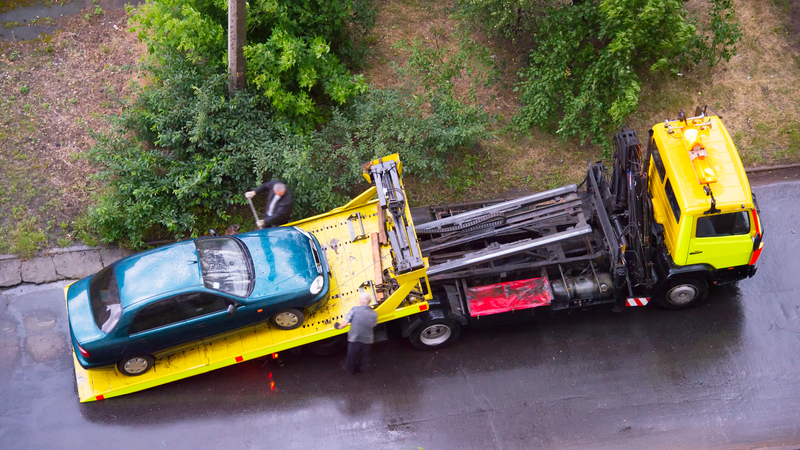
A parking brake that will not release can prevent a truck from rolling and make ordinary transport unsafe. In Phoenix, AZ, Sun City Towing, Inc. can coordinate truck towing based on the brake condition, vehicle weight, drivetrain, wheel movement, location, and access around the disabled truck.
Drivers should not force the vehicle forward when one or more wheels remain locked. Doing so may damage brake components, tires, axles, or the drivetrain and can make the eventual towing process more complicated.
Why Might a Truck’s Parking Brake Stay Engaged?
A parking brake can remain engaged for several reasons. The cable may be seized, stretched, damaged, or disconnected from the release mechanism. Mechanical components inside the rear brakes may also bind and prevent the wheels from rotating.
Electronic parking brake systems can experience switch, actuator, wiring, battery, or control-module problems. On larger commercial trucks, air-pressure loss or a brake-system malfunction may keep spring brakes applied.
Heat, corrosion, road debris, damaged linkage, and extended periods without vehicle movement may also contribute to a locked brake. Drivers do not need to diagnose the precise cause before contacting a truck towing service. They should explain how the truck responds when the brake is released and whether any wheels can move.
What Signs Indicate the Brake Has Not Released?
The most obvious sign is that the truck does not move when placed in gear. The vehicle may strain against the brake, remain completely stationary, or drag one or more wheels.
Other warning signs can include a parking brake indicator that stays illuminated, a release lever or pedal that feels unusually loose, resistance from the rear axle, a burning odor, or scraping sounds when the truck attempts to move.
Drivers should stop immediately if the truck begins dragging a tire. Continued movement can create excessive heat, flatten the tire surface, and place additional stress on the braking and suspension systems.
Why Should Drivers Avoid Forcing the Truck to Move?
Applying more engine power does not solve the underlying problem. It can increase strain on the transmission, driveshaft, differential, axle, tires, and brake assemblies.
A locked wheel may also cause the truck to move unpredictably. The vehicle can pull toward one side, slide on loose material, or become difficult to control in a parking lot or near traffic.
When the truck cannot roll normally, professional towing services can assess the wheel condition and determine how the vehicle should be loaded or supported. The goal is to move the truck without relying on the locked wheels to rotate.
What Information Does Dispatch Need?
Accurate information helps dispatch select appropriate truck towing equipment. Drivers should provide the truck’s year, make, model, body style, drivetrain, approximate weight, and whether it is carrying cargo or mounted equipment.
Dispatch should also know:
-
Whether the parking brake uses a pedal, lever, electronic switch, or air system
-
Which wheels appear locked
-
Whether the truck shifts into neutral
-
Whether the steering works normally
-
Whether the engine starts
-
Whether any warning lights are illuminated
-
Whether smoke, heat, or unusual odors are present
-
Whether the truck recently received brake work
Drivers should mention aftermarket wheels, oversized tires, lift kits, service bodies, toolboxes, tanks, racks, or other modifications. These details may influence equipment clearance, securement, and loading angles.
How Does the Type of Truck Affect the Tow Plan?
A standard pickup with one locked rear wheel may require a different response than a loaded utility truck, box truck, dual-rear-wheel pickup, or commercial vehicle with spring brakes engaged.
Vehicle weight is particularly important. Cargo and mounted equipment can make a truck considerably heavier than its empty factory configuration. The towing provider should know whether the truck is empty, partially loaded, or carrying substantial materials.
The drivetrain also matters. Rear-wheel-drive, four-wheel-drive, and all-wheel-drive trucks have different mechanical connections between the axles. The operator must consider which wheels can rotate and how the vehicle can be moved without stressing connected components.
How Does the Breakdown Location Affect Emergency Towing?
Phoenix includes busy highways, warehouse districts, construction areas, parking structures, loading docks, residential streets, and desert shoulders. Each location presents different access and positioning challenges.
Drivers should provide an exact address, map pin, cross street, travel direction, business entrance, gate number, or mile marker. They should also report low overhead clearance, steep slopes, narrow access, soft ground, nearby traffic, or vehicles blocking the tow truck’s approach.
If the disabled truck is inside a garage or confined loading area, dispatch needs the available height and width. If it is exposed to fast-moving traffic, the caller should describe its lane position and surrounding hazards.
What Should Drivers Do While Waiting for 24 Hour Towing?
Activate the hazard lights and move to a protected area when it is safe. Do not crawl under the truck, strike brake components, disconnect cables, or place hands near wheels that could move unexpectedly.
Keep the keys available and confirm the intended repair destination. Tell dispatch if the truck begins producing smoke, strong odors, or visible heat near a wheel.
Drivers should also secure loose cargo when it can be done without entering traffic or approaching an unsafe part of the vehicle. Clear information supports an efficient emergency towing response and helps the operator prepare before arriving.
Get a Locked-Brake Truck Moved Without Added Damage
When a parking brake will not release, avoid forcing the truck forward or dragging locked wheels. Contact Sun City Towing, Inc. for truck towing, emergency towing, or 24 hour towing assistance in Phoenix, AZ. Explain the brake system, wheel condition, truck weight, cargo, location, and destination so their team can prepare an appropriate transport plan for the disabled vehicle safely.