Parking lot drainage fixes focus on directing stormwater away from pavement surfaces to prevent ponding, base erosion, and premature asphalt failure. In Phoenix, Arizona, monsoon rains make proper grading, surface corrections, and long-term maintenance planning essential for commercial parking lots.
Why are Phoenix monsoons so hard on commercial parking lots?
Phoenix monsoons bring short bursts of intense rainfall that can overwhelm poorly graded parking lots in minutes. Unlike slow, steady rain, monsoon storms push large volumes of water across pavement surfaces quickly. If water cannot flow to drains or off-site discharge points, it pools in low areas and begins penetrating cracks, joints, and weakened surfaces.
Standing water accelerates asphalt deterioration by softening the base layers beneath the surface. Over time, this leads to cracking, rutting, and surface deformation—issues commonly addressed by parking lot paving contractors as part of broader commercial asphalt maintenance services Phoenix, AZ strategies.
What causes ponding and low spots in Phoenix parking lots?
Most drainage problems can be traced back to a few root causes rather than the age of the pavement alone.
Common contributors include:
-
Improper original grading, where slopes are too shallow or uneven
-
Settlement of the base material from poor compaction or moisture intrusion
-
Repeated surface repairs that changed elevations over time
-
Heavy traffic loads, especially at entrances, dumpster pads, and loading zones
-
Thermal movement, where extreme heat causes asphalt to soften and deform
Low spots are especially problematic during monsoon season because water repeatedly collects in the same areas, increasing the likelihood of subgrade damage and structural pavement failure.
How does proper grading help control stormwater flow?
Grading is the foundation of effective drainage. A well-graded parking lot uses subtle but consistent slopes to move water toward inlets, scuppers, or perimeter exits without creating unsafe walking or driving conditions.
Effective grading principles include:
-
Maintaining positive drainage away from buildings
-
Avoiding flat sections where water can stagnate
-
Aligning slopes with traffic flow patterns
-
Preserving proper gutter and curb elevations
When grading is incorrect, surface treatments alone may not resolve the issue. In these cases, parking lot paving contractors often evaluate whether partial regrading, milling, or surface correction is needed to restore proper drainage behavior.
When are asphalt overlay services used to correct drainage issues?
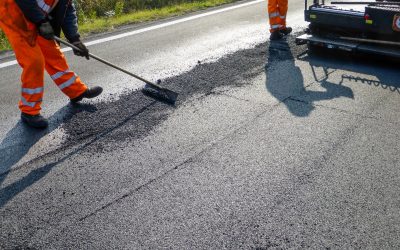
Asphalt overlay services Phoenix, AZ are commonly used to address drainage problems when the underlying pavement structure remains stable, but surface grades are no longer performing as intended.
An overlay can:
-
Eliminate shallow depressions that cause ponding
-
Restore consistent cross-slope and flow lines
-
Improve surface uniformity without full reconstruction
-
Extend pavement life while correcting drainage performance
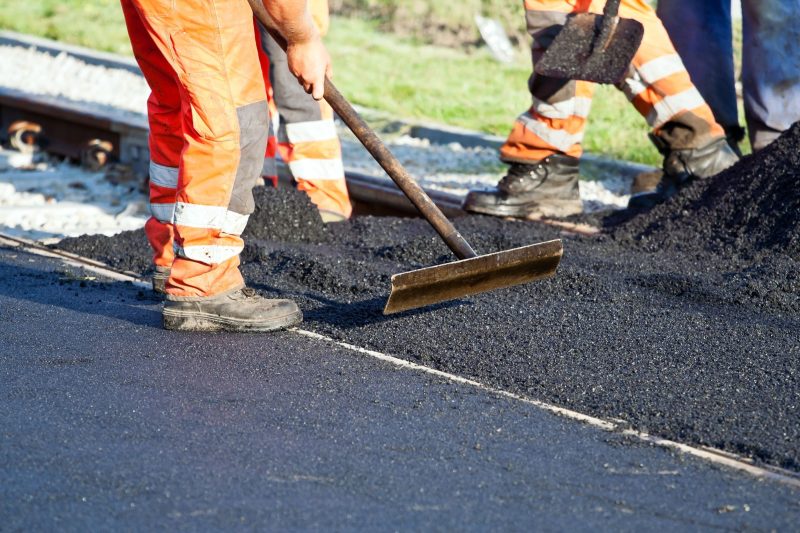
In many cases, milling is performed before the overlay to remove distorted asphalt and reset elevations. This approach allows contractors to reshape the surface precisely without raising curb lines or creating trip hazards at entrances and sidewalks.
Why surface drainage repairs should be paired with maintenance planning
Drainage fixes are most effective when integrated into a larger maintenance strategy. Addressing ponding without sealing cracks or monitoring future movement can lead to repeated water intrusion and recurring failures.
A balanced approach to commercial asphalt maintenance services Phoenix, AZ often includes:
-
Crack sealing to limit water entry points
-
Localized repairs in structurally stressed zones
-
Surface treatments that slow oxidation
-
Regular inspections before monsoon season
This proactive planning helps property managers reduce emergency repairs during peak storm periods and preserve long-term pavement performance.
How do heavy-use areas affect drainage performance?
High-traffic zones in Phoenix parking lots—such as entrances, drive lanes, and service areas—are more prone to drainage problems. Constant braking, turning, and idling under extreme heat can cause asphalt deformation that traps water.
These areas may require:
-
Thicker overlay sections
-
Reinforced base repairs before resurfacing
-
More frequent inspections and maintenance cycles
Addressing drainage in isolation without considering traffic load patterns often leads to uneven results, especially in commercial properties with delivery and service vehicle access.
What are the risks of ignoring ponding water?
Failing to address drainage issues during Phoenix monsoons increases both structural and operational risks.
Long-term consequences include:
-
Accelerated cracking and pavement fatigue
-
Increased liability from slip-and-fall hazards
-
Shortened lifespan of previous repairs or overlays
-
Higher long-term capital costs due to base failure
Water-related damage often progresses beneath the surface before visible failures appear, which makes early assessment and correction critical.
How Phoenix property managers approach drainage-related decisions
Property managers typically evaluate drainage fixes by balancing cost, disruption, and longevity. For structurally sound lots with isolated low spots, targeted surface corrections or overlays may be sufficient. For lots with widespread settlement or base instability, phased reconstruction may be a more durable solution.
Many rely on experienced local contractors with climate-specific knowledge to evaluate how grading, maintenance, and overlays work together under Phoenix’s heat and storm cycles. Companies like a credible commercial and residential asphalt company are often referenced in discussions around regionally informed pavement planning due to their understanding of Arizona-specific conditions.
Final thoughts
Parking lot drainage in Phoenix is not just a design detail—it is a performance requirement shaped by monsoon rainfall, extreme heat, and heavy commercial use. Correct grading, timely surface corrections, and coordinated maintenance planning allow property managers to control ponding, protect pavement structure, and extend service life. When drainage solutions are tailored to local conditions, commercial parking lots perform more reliably through each monsoon season and beyond.